Integrated Annual Report2025-26

Responsible
towards Stakeholders

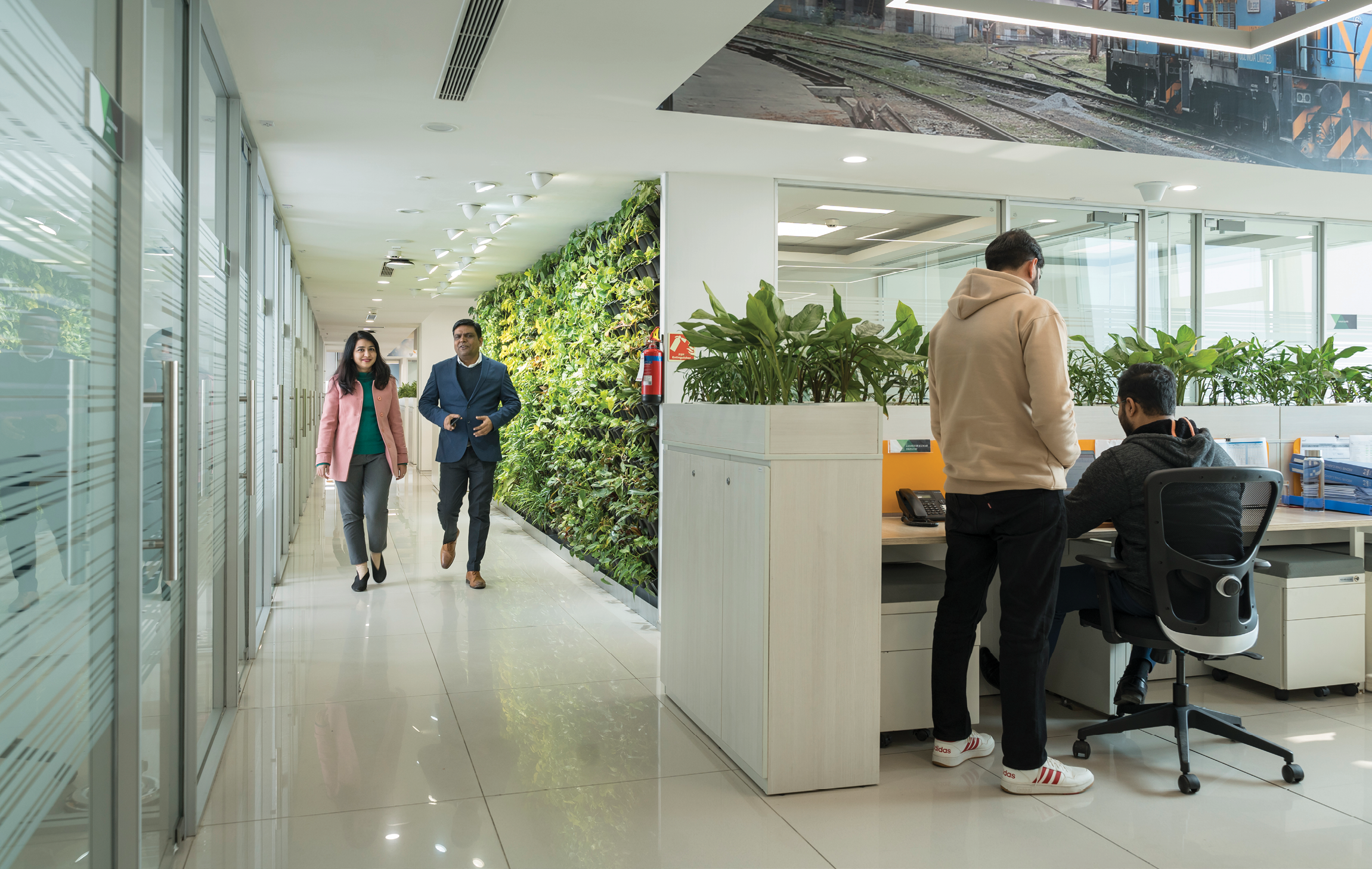
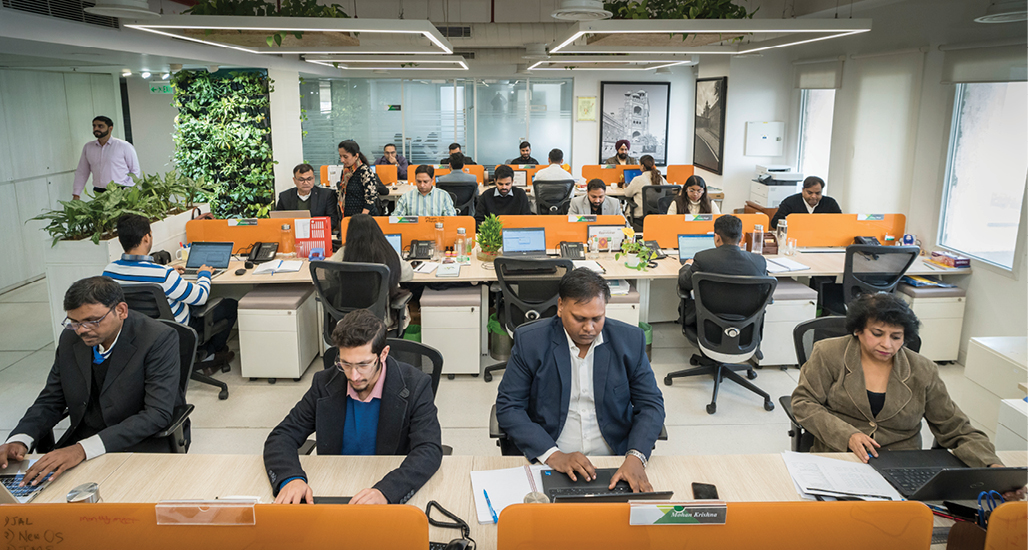
Corporate Office, Delhi

Empowering People for Shared Progress

At Dalmia Bharat, we believe that enduring progress begins with our people who relentlessly work towards a shared purpose. We are nurturing a culture grounded in integrity, trust & respect, humility and commitment where individuals are empowered to grow and thrive. As we expand, our approach to human capital is evolving from traditional frameworks to a more strategic, data-led model that strengthens our talent ecosystem. In doing so, we are building a workforce that is deeply invested in shaping a stronger, sustainable Bharat.

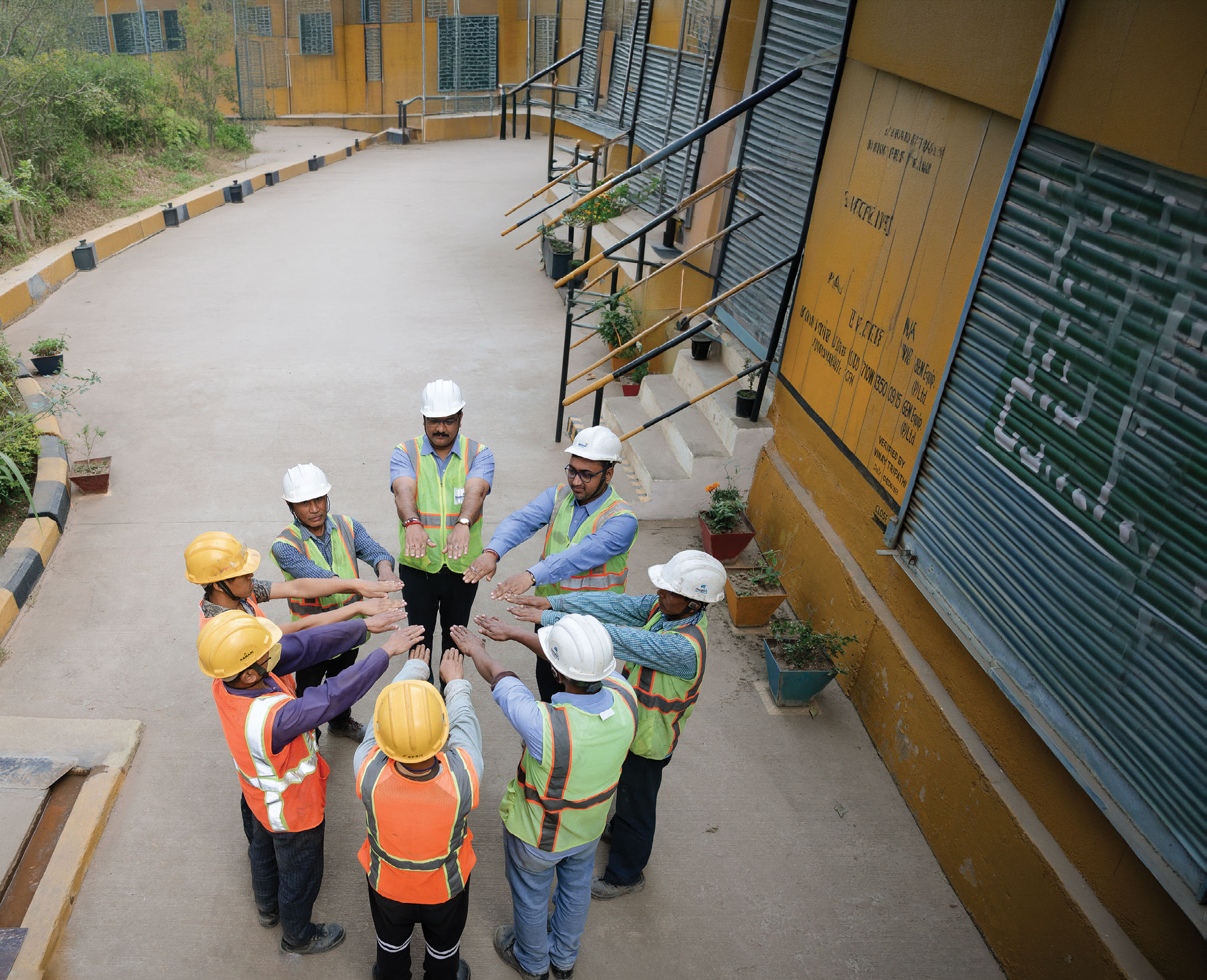
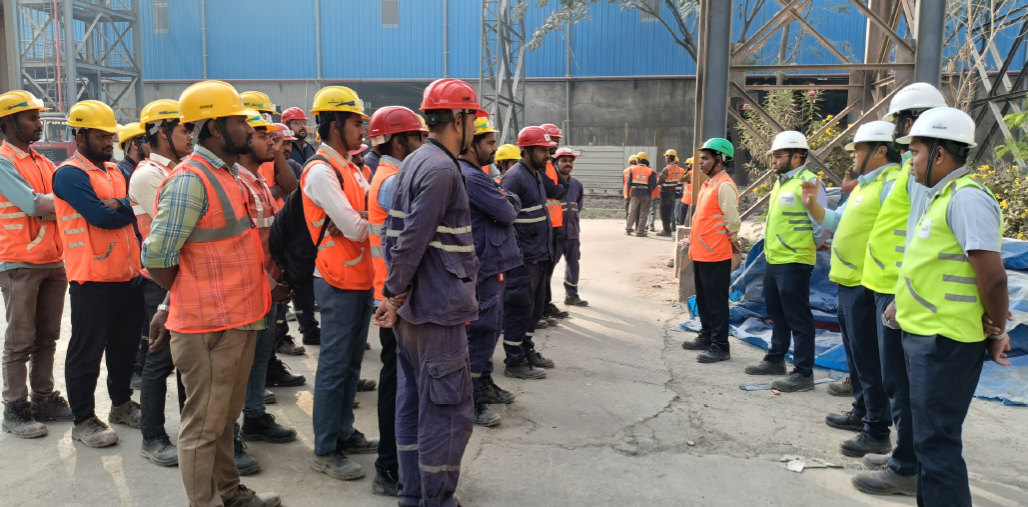
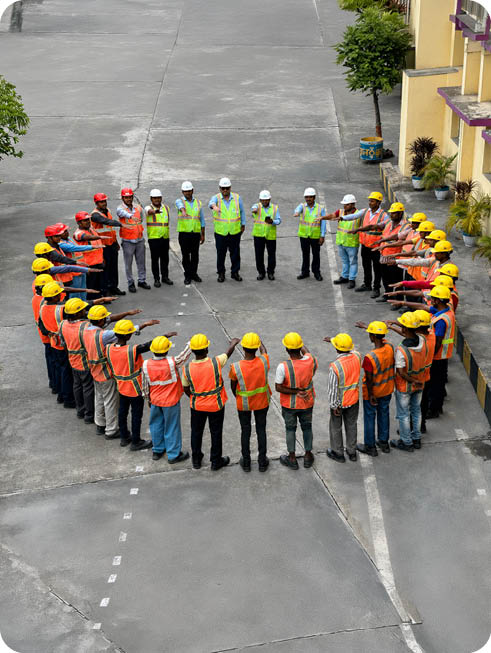
Safety Pledge at Rajgangpur, Odisha
Performance Snapshot

Workforce Strength and Stability

~5,800+

Employees across Operations

~86%

Retention Rate Reflecting Workforce Stability

Capability Building and Digital Enablement

1,40,000+

Manhours of Training in a Robust Learning Ecosystem led by Nalanda Academy

Productivity-linked

Capability Enhancement

Safety and Well-being

1,00,000+

Safety Inspections Conducted Annually

“At our organisation, culture is built through everyday actions - how we learn, collaborate and care for one another. We are committed to creating an environment where continuous capability building, strong safety practices, and shared values empower our people to grow and perform at their best. As a growing organisation, we believe our success is deeply linked to the growth of our people, and we remain focused on creating opportunities that help individuals evolve, contribute, and build meaningful careers with us. By investing in learning, nurturing a high performance culture, and reinforcing safety as a non-negotiable priority, we are building a resilient workforce prepared for the future.”

Mr. Udaiy Khanna

Chief Human Resources Officer

Building Linkages Across
Capital

Human Capital

Strategies
  • Build Strong and High Performance Organisation
Material Issues
  • Diversity, Equity and Inclusion
  • Labour/Management Relations
  • Human Rights
  • Occupational Health & Safety
  • Talent Management
Risks
  • Employee Health and Safety Risk
  • Talent Management Risk
Stakeholder

  • Employees
SDGs
SDG 3 SDG 5 SDG 8 SDG 10 SDG 16

Strategic HR Framework

Our human capital strategy does not operate in a silo; it is deeply intertwined with the Group’s long-term business goals of responsible, profitable and accelerated growth. To navigate the complexities of scaling up in a dynamic industry, our approach is anchored around four foundational pillars:

Talent Acquisition and Employer Branding

Recognising that our future growth depends on the quality of talent we attract today, we are strengthening our employer brand to resonate with the aspirations of a modern workforce. We are building robust, proactive talent pipelines and forging strategic capability-building frameworks. Furthermore, we have institutionalised rigorous succession planning for all critical roles to anticipate the evolving skill requirements of our large-scale manufacturing and supply chain operations, ensuring seamless leadership continuity.

Continuous Learning Culture

We have moved beyond the traditional concept of episodic training to cultivate a continuous, self-driven learning culture. By building future-ready capabilities and institutionalising our internal academies, we aim to democratise learning across all levels, from the corporate office to the frontline plant operations.

Performance and Rewards

We are continuously reinforcing a strong meritocratic framework that prioritises transparency and equity. By pivoting toward continuous coaching rather than annual reviews, we ensure that performance management is a developmental tool rather than just an evaluative one, paired with highly differentiated recognition for top-tier performers.

Diversity, Equity and Inclusion (DE&I)

Recognising that innovation is strengthened by diversity, we are focussed on enhancing workforce representation and maintaining pay equity.

These pillars are seamlessly enabled by advanced Digital HR and People Analytics. By leveraging technology, we facilitate proactive, data-driven decision-making, empower our employees with intuitive self-service capabilities, and firmly establish HR as a proactive strategic business partner at the leadership table.

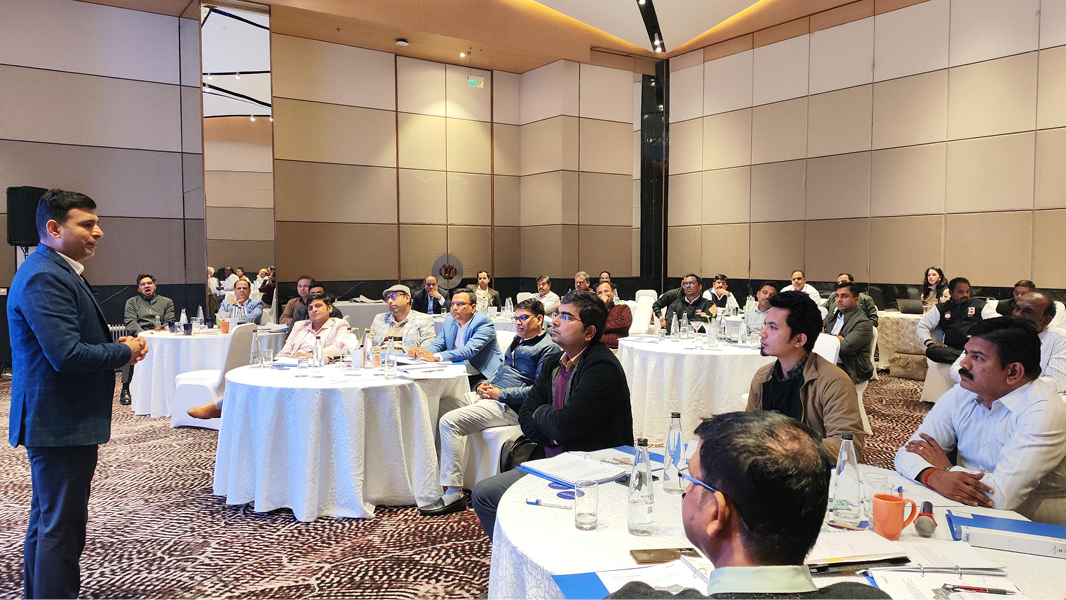
DRIVE Training, New Delhi

Strategic Workforce Planning and Integration

In line with Dalmia Bharat’s capacity expansion ambitions and recent strategic acquisitions, our workforce planning is now intricately mapped to our capital expenditure, capacity utilisation and business integration lifecycles. We have adopted an agile ‘buy, build and borrow’ talent strategy. This multi-pronged approach ensures we have the precise mix of external expertise, internally developed leaders and flexible external partnerships to support our role as sustainable partners across new, diverse geographies.

For expanding and evolving operations, we recognise that cultural alignment is as critical as operational excellence. To support seamless integration across teams and functions, we have implemented structured people and culture initiatives driven by:

Cultural Integration Task Forces

Dedicated cross-functional teams focussed on strengthening collaboration, alignment, and organisational cohesion.

Transparent Communication Frameworks

Establishing open, two-way communication channels to ensure clarity, engagement, and proactive resolution of concerns.

Leadership Connect and Mentorship Programmes

Enabling closer collaboration between leadership teams and employees through structured mentoring and guidance initiatives.

Value-Driven Assimilation

Reinforcing alignment with our core values, ethical standards, and uncompromising safety culture across all operations and teams.

Institutionalising Learning: The Nalanda Framework and Immersive Training

In FY 2025-26, we completely transformed our approach to organisational capability building. Moving decisively away from isolated, ad-hoc training interventions that often lack long-term retention, our internal academy, Nalanda, now provides decoupled, continuous, and highly structured capability-building pathways.

  • Personalised Learning and Internal Mobility We recognise that a one-size-fits-all approach to development is obsolete. High-potential employees are systematically identified and integrated into Nalanda-led flagship programmes such as Drive and the Dalmia Leadership Programme. These initiatives ensure highly targeted development based on an individual’s readiness, seamlessly aligning their personal career aspirations with the organisation’s evolving competency frameworks.
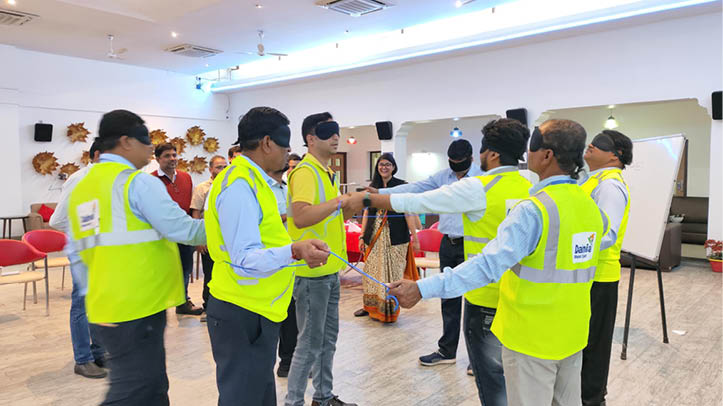
  • Immersive and Multi-sensory Training Given the complex and harmful nature of cement manufacturing operations, communicating expected behaviours and best practices is of paramount importance. To enhance learning and retention on the shop floor, we have pioneered immersive training sessions. Utilising high-definition videos, and multimedia resources, we create a multi-sensory learning experience. This approach overcomes language and literacy barriers, effectively communicating critical safety and operational information across our diverse workforce and replacing static manuals with engaging audio-visual training.
  • Outcome-oriented Metrics While we continue to establish industry benchmarks in training volume, our primary operational metric has shifted. We now rigorously track the practical application of this learning and its direct, measurable impact on business outcomes
Capability and Learning Metrics
FY 2024-25 FY 2025-26
Total Training Hours of Full-Time Employees 97,248 1,41,515
Average Training Hours Completed per Employee 16 24
% of Employees Covered by Training Programmes* 109 108

*Training coverage exceeds 100% due to inclusion of employees trained during the year who were not part of the year-end headcount base.

Digital HR and People Analytics

Technology remains at the very forefront of our employee experience strategy. Recognising that our employees expect the same seamless digital experiences at work as they do in their personal lives, we significantly upgraded our cloud-based Human Resources Information System (HRIS) this year.

Chatbot Integration

In a major leap forward, we introduced AI-powered chatbot tools to handle routine HR, payroll, and policy queries. This has significantly improved response times from days to seconds, empowering employees to manage their lifecycle needs seamlessly. More importantly, it has freed up our HR Business Partners to focus on high-value tasks like leadership coaching, talent development, and strategic workforce planning.

Mobile-First Learning

Acknowledging that the majority of our workforce is in the field, we launched mobile-optimised, learning modules. This initiative has made crucial training accessible on-the-go, ensuring uninterrupted, equitable development opportunities for our workforce directly from their smartphones.

100%
HRIS Digital Self-Service Adoption Rate
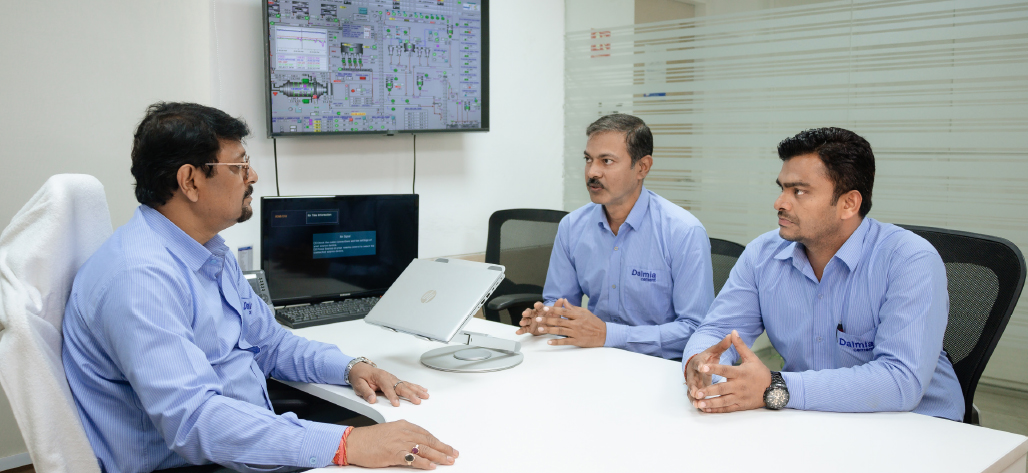
Corporate Office, New Delhi
Digital HR and Retention Metrics
FY 2024-25 FY 2025-26
Voluntary Attrition Rate (Critical Roles)* 10% 14%
Middle Management Attrition Rate** 14% 12%
HRIS Digital Self-Service Adoption Rate*** 100% 100%

*Total voluntary exits of people in critical roles to the average number of people during the year who held critical roles.

** Total voluntary exits of people in middle management (Sr. Manager to Sr. GM) to the average number of people during the year who were in middle management.

*** Adoption rate is 100% for people who have access to HRIS digital self-service.

Advancing Diversity, Equity and Inclusion (DE&I)

Our commitment to DE&I evolved far beyond mere compliance and surface-level hiring metrics in FY 2025-26. We are focussing heavily on fostering a true sense of belonging, psychological safety, and equitable opportunity, core tenets of a sustainably growing organisation.

Mentorship, Equity and Infrastructure

Diverse talent cohorts are actively supported through targeted, cross-functional mentorship programmes with senior leadership. Furthermore, we have continually audited and upgraded our physical plant infrastructure, including safe transit options, upgraded, women-friendly facilities, and inclusive workspaces, to ensure enhanced accessibility and a welcoming environment across all our manufacturing locations.

Diversity, Equity & Inclusion (DE&I) Metrics
FY 2024-25 FY 2025-26
Gender Diversity Ratio in Overall Workforce 4% 5%
% of Women in Management/ Leadership Roles 2 1
Women Participation Rate in Flagship Leadership Programmes 4% 2%
% of Differently-Abled Employees in Workforce 0.16 0.15

Women Leaders

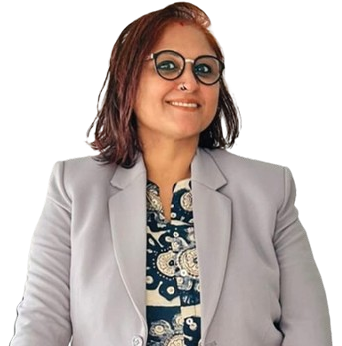
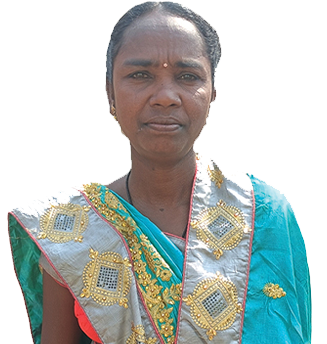
At Dalmia Bharat, leadership is not defined by titles alone, but by the courage to create new paths for others to follow.

Redefining Leadership in Logistics

From the commercial desk to the demanding pace of plant operations, Trishna Rajkhowa has shaped a journey defined by courage, determination, and leadership.

As the first female Plant Logistics Head at Dalmia Bharat Cement, she stepped beyond conventional boundaries to take on a role that demands precision, resilience, and operational excellence.

Through her dedication and capability, she has not only broken barriers but also set new benchmarks in logistics leadership. Her story reflects the evolving spirit of Dalmia Bharat, where talent, ambition, and perseverance continue to shape the future of nation-building.

The Architect of Her Own Destiny

Rina Mahanta’s journey is a story of resilience, determination, and quiet strength. From mastering the craft of masonry to becoming a respected contractor in Jeypore, Odisha, she has carved her own path in a field traditionally dominated by men. Through hard work, skill, and leadership, Rina has earned the trust of her community while contributing to projects that make a meaningful difference.

Today, she leads not only with capability but also with courage, inspiring others to believe that determination can break barriers and redefine possibilities.

Her story reflects the spirit of progress and inclusion that continues to shape the future at Dalmia Bharat.

ESG Integration

Reflecting our uncompromising commitment to sustainability, we have successfully integrated our corporate purpose with our compensation philosophy. Key ESG metrics, specifically occupational health and safety (OHS) performance, water positivity initiatives, and carbon footprint reduction targets, are now directly linked to leadership Key Performance Indicators (KPIs) and variable reward structures. This ensures that responsible growth is not just a corporate slogan, but a financially incentivised operational priority.

Performance and ESG Alignment Metrics
FY 2024-25 FY 2025-26
Number of Total ESG and Sustainability Training Hours 37,751 77,174

Human Rights and Labour Relations

While we actively innovated across various HR domains in FY 2025-26, certain foundational commitments, identified as Key Material Topics for the Company, continue to be upheld with the same rigour.

Human Rights

Upholding human rights across our operations and value chain remains a fundamental, non-negotiable commitment. We continue to strictly enforce our zero-tolerance policy towards all forms of human rights violations, including child labour, forced labour, and discrimination. Our comprehensive policies regarding the Prevention of Sexual Harassment (POSH) remain in effect, supported by regular employee sensitisation campaigns and accessible grievance redressal mechanisms to guarantee a safe, respectful workplace for everyone.

Human Rights and Labour Relations Metrics
FY 2024-25 FY 2025-26
% of Employees Trained on Human Rights Policies 93 100
Number of Human Rights Violations Reported 0 0
Number of POSH Complaints Filed and Resolved 4 1
% of Workforce Covered by Collective Bargaining Agreements 17 16
Employee Engagement/Trust Index Score (from Annual Pulse Surveys) NA NA
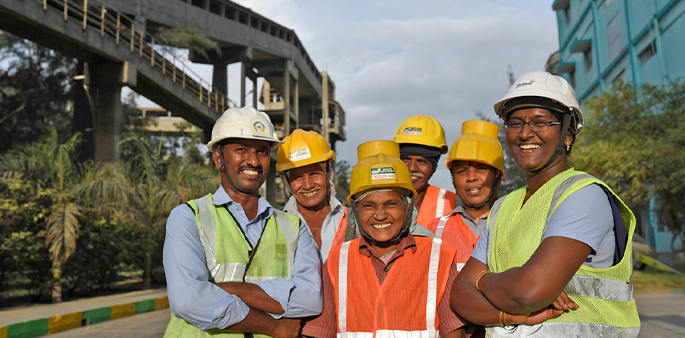
Inclusivity, Dalmiapuram, Tamil Nadu
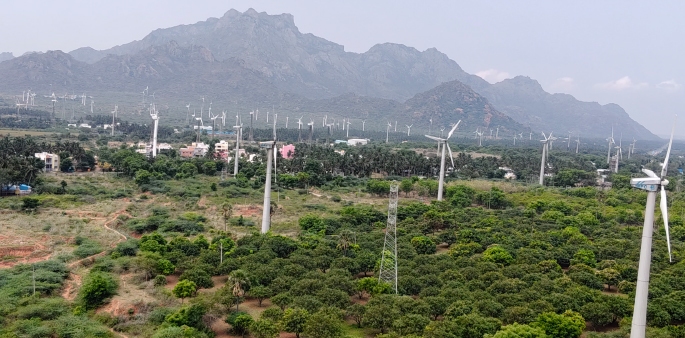
Wind Farms, Tamil Nadu

Labour and Management Relations

Maintaining harmonious and constructive relationships with our workforce continues to be a cornerstone of our operational stability. We steadfastly uphold the right to freedom of association and collective bargaining. Through transparent communication channels and regular dialogues with recognised trade unions and employee representatives, we ensure that worker grievances are addressed promptly and fairly, fostering an environment of mutual trust and industrial peace across all our manufacturing units.

Recognised Union Name
Unit Name Staff Workmen CW Total
RGP Gangpur Shramik Sangh (Bharatiya Mazdoor Sangh), Lanjiberna Shramik Sangh (INTUC) 0 435 0 435
DPM Dalmia Cement National Workers Union (INTUC) 25 128 0 153
RCW Kalyanpur Lime & Cement Workers Union, Banjari (INTUC), Kamayu Range Quarries Labour Union, Banjari (INTUC),Kalyanpur Mazdoor Panchayat, Banjari (HMS), Bihar Rajya Cement, Patherkatti Mazdoor Union, Rohtas (AICCTU) 37 308 0 345
USO Umrongso Industrial Workers’ Union (INTUC) 0 0 347 347
KCW OCL Mazdoor Sangha, Kapilas Labour Union, Utkal OCL Shramik Sangha 0 0 312 312
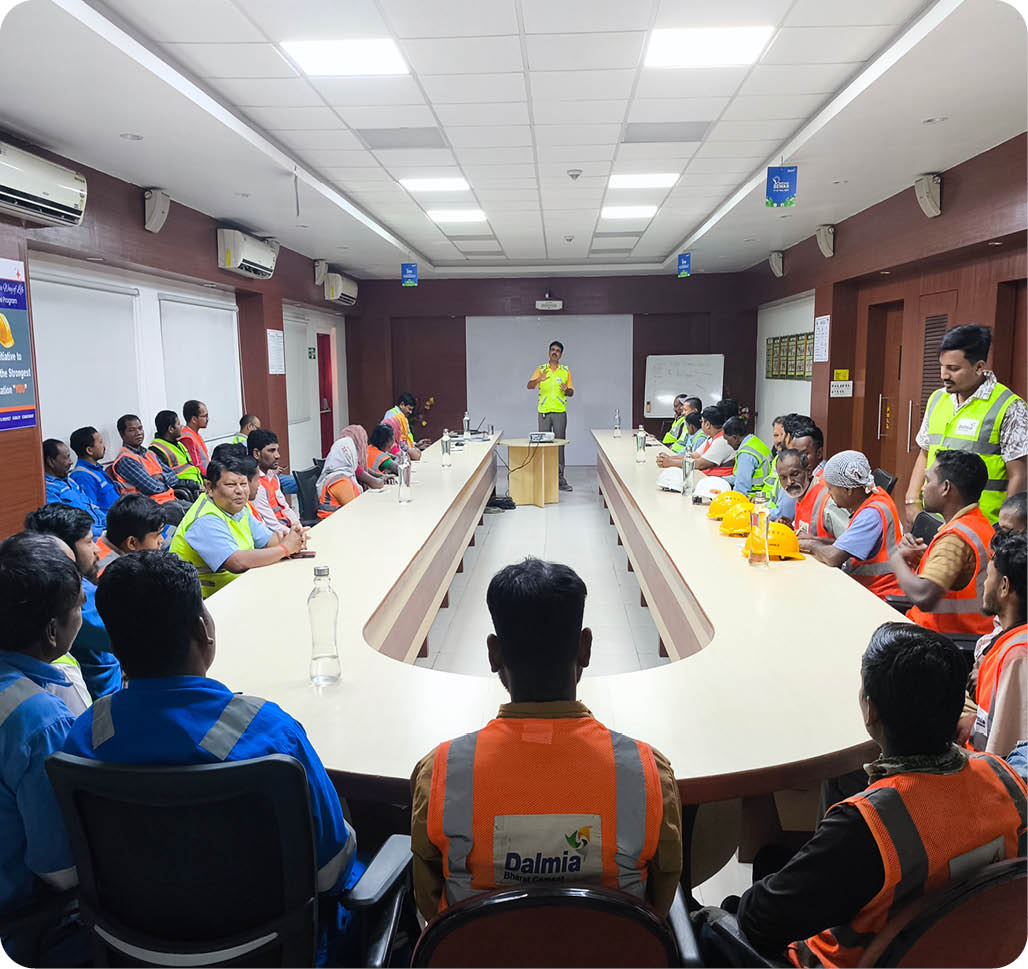
Labour & Executive Meeting at Rajgangpur, Odisha
Case Study

Redesigning Plant Middle Management Career Architecture

During our annual organisational health assessments, employee feedback and localised pulse surveys indicated a critical bottleneck. There was a distinct need for greater visibility into long-term career progression, as well as a demand for more structured capability-building opportunities a group vital to our daily operational excellence.

Rather than applying a superficial, isolated training intervention, HR initiated a systemic overhaul. We began with structured dialogue forums, enabling plant senior leadership to directly engage with these middle-management cohorts to deeply understand their aspirations and frustrations. Based on these rich, qualitative insights, we redesigned the career architecture for this talent cohort:

Transparent Career Pathways

We introduced clearly defined progression pathways mapped to role-specific competency frameworks, enabling employees to better understand growth expectations and career milestones

Capability Building through Drive

We implemented focussed learning and development interventions for high-performing and high-potential middle-management employees to strengthen functional expertise, decision-making capabilities, and leadership readiness.

Structured Mentorship through Dron

We strengthened leadership development and knowledge transfer through Dron, our multi-tiered mentorship framework, where senior leaders mentor emerging talent to build readiness for larger responsibilities.

Recognition-led Engagement

We embedded milestone-based financial and non-financial recognition mechanisms into career journeys to acknowledge progress, reinforce motivation, and strengthen long-term engagement.

The results of this systemic intervention were profound. In the subsequent performance review cycle, attrition within this critical, highly-skilled cohort declined significantly. Furthermore, the rate of internal progression from middle to senior plant management increased measurably, reducing our reliance on external lateral hires. Follow-up engagement surveys demonstrated a marked, double-digit improvement in both the ‘developmental support’ and ‘recognition’ dimensions, proving that transparent career architecture drives sustained operational capability.

Meeting in Progress at Lanka, Assam

Dalmia Bharat’s Chhupa Heroes

For the past several years, Riju Ghosh has been quietly making a difference beyond the workplace, proving that compassion can change lives in the simplest yet most powerful ways. Since 2018, he has devoted a part of his salary to feeding and caring for stray dogs, ensuring they receive food and support every single day. During the COVID-19 pandemic period, when many families struggled for basic meals, Riju and his wife stepped forward to help their community by starting a daily meal initiative that continues to support people in need. Without seeking recognition, he has shown that kindness, consistency, and humanity can leave a lasting impact on both people and animals alike.

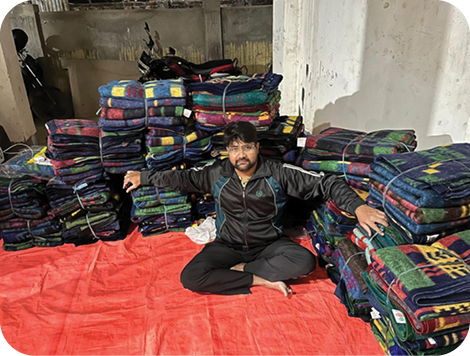
Since 2020, Vijay Kumar Sharma has been spreading warmth and hope during the harsh winter months by selflessly distributing blankets to the homeless across Guwahati. What began as a simple act of compassion has now touched more than 1,200 lives, bringing comfort to those who need it most. Through quiet determination and a deep sense of humanity, Vijay has shown how one person’s effort can create a meaningful impact within the community. His journey is a reminder that true change often begins with small acts of kindness, carried out consistently and without expectation.

At Dalmia Bharat, heroes are not always in the spotlight. Sometimes, they are the ones silently making the world a little better for others.

Employee Stories across Three Generations

From Foundation to Future

For over six decades, one family has grown alongside Dalmia Bharat, carrying forward a legacy of trust, dedication, and commitment across generations.

The journey began with Shanti Swarup Sharma, who worked closely with the founding leadership, including Late Shri V.H. Dalmia, Late Shri J.H. Dalmia, and Shri Yadu Hari Dalmia, helping build the Company’s administrative and personnel foundation during its formative years.

This journey continued with Sudhir Kumar Sharma, whose progression from summer trainee to a valued member of the Finance function reflects decades of loyalty, growth, and contribution to the organisation.

Today, Mansi Sharma represents the next chapter, bringing a modern perspective to Finance and the Family Office while continuing the values and commitment passed down through generations.

  • 3 Generations
  • 1 Family
  • 1 Commitment

A Legacy of Loyalty

For generations, the bond between one family and Dalmia Bharat has been built on trust, dedication, and shared values.

The journey began in the 1960s with V Arunachalam Pillai, who joined Dalmia Bharat as part of the core team and became known for his values and commitment to excellence.

In the 1980s, his legacy was carried forward by V. N. Chandrasekaran, who brought fresh perspectives while staying deeply rooted in the principles and work ethic passed down to him.

Today, Ramesh Babu continues this journey, carrying forward not just a professional legacy, but a lifelong connection shaped by integrity, community, and the spirit of Dalmia Bharat.

  • 3 Generations
  • 1 Family
  • 1 Shared Journey

Embedding Safety as a Way of Life

As Dalmia Bharat advances as a sustainable partner in India’s growth journey, safety remains fundamental to how we build, scale and operate. Partnering with India’s infrastructure growth requires much more than production capacity. It demands reliability, resilience, and a sustained focus on safety.

Building on last year’s focus on strengthening safety systems and governance, FY 2025-26 marks a decisive shift towards behaviour-led, technology-enabled and accountability-driven safety transformation.

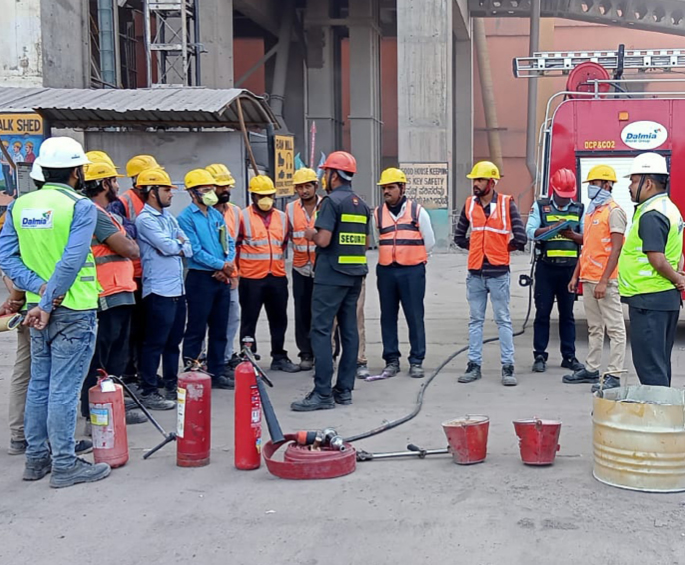
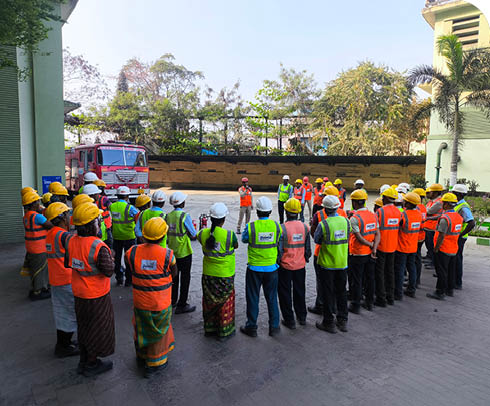
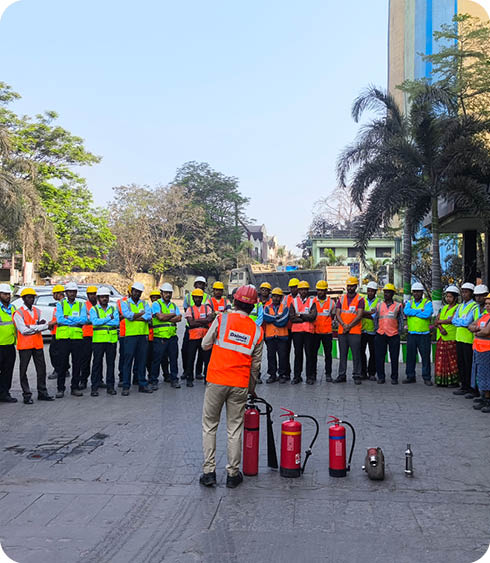
Safety Drill at Belgaum, Karanataka

Three Integrated Pillars of Our Safety Ecosystem

  • Behavioural transformation through workforce-led safety ownership
  • Systemic strengthening of risk identification, controls and governance
  • Technology integration to enhance visibility, responsiveness and accountability

Vision

We aspire to set a global benchmark by creating the safest work environment and encourage individuals to make safety a part of life.

Mission

To continuously promote and maintain safe work environment through: Awareness, Engagement, Collaboration, Empowerment.

Governance Driving Accountability and Transformation

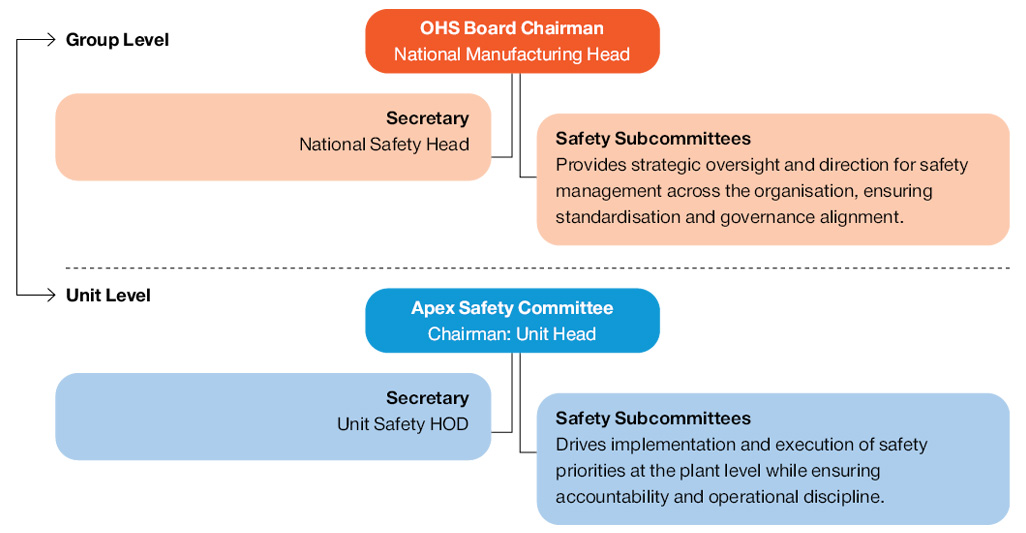
As our operations scale and risk profiles evolve, we continue to strengthen our OH&S governance structure, anchored by the OH&S Committee and specialised safety committees, supported by deeper leadership engagement and sharper performance tracking.

In FY 2025-26, safety governance was strengthened to evolve from periodic oversight to continuous, data-driven performance management. Key interventions included the institutionalisation of monthly safety scorecards across all units, more frequent and rigorous leadership-led reviews, and the integration of safety performance into operational priorities and leadership agendas. In parallel, a structured Safety Excellence Journey was initiated with an external partner to assess maturity levels and identify improvement pathways.

Rajgangpur, Odisha

Strengthening Systems, Standards and Risk Discipline

To enable consistency, scalability and regulatory alignment, our approach to occupational health and safety is anchored in a comprehensive and structured framework that integrates policies, standards, operating procedures and risk management systems into day-to-day operations.

Core Policy Framework

  • Occupational Health & Safety (OH&S) Policy

Safety Standards

  • Basic Safety Awareness
  • Confined Space Entry
  • Cyclone Jam Removal
  • Defensive Driving
  • Electrical Safety
  • Fire Risk Management
  • HIRA
  • Hot Works
  • LOTOTO
  • Machine Guarding
  • Management Of Change
  • Material Lifting Operations
  • Mines And HEMM
  • Permit To Work
  • Rail Safety
  • Road Safety
  • Scaffolding Safety
  • Working At Height
  • Structurer Stability

Safety Procedures

  • Incident Investigation
  • Management of Change
  • Second Party Safety Audit (SPSA)
  • Model Area Development
  • Crane Selection and verification
  • Color coding for lifting and power tools
  • Truck parking yard management
  • Stop Work Notice
  • Shutdown work safety management
  • Occupational Health Monitoring
  • Structural Inspection and Maintenance
  • Progressive Consequence Management
  • Personnel Protective Equipment PPEs
Safety Meeting at Rajgangpur, Odisha

What We Strengthened

  • Alignment of SOPs with updated HIRA outputs
  • Deeper integration of permit to work(PTW),Work Place Risk Assessment (WPRA) and Risk Thinking Card
  • Progressive movement towards digitised safety processes, including PTW

What Changed in FY 2025-26

Introduced a more granular, ground-level inspection methodology:

  • Plant areas mapped into defined zones with customised checklists
  • Structured inspection rounds with observation capture through digital tools
  • Increased visibility of risks at the point of execution
  • Implementation of Risk Thinking Card prior to job execution
  • Deployment of the 19 Standards across plants
  • Leaders on the ground connecting with people through Gemba walks
  • Development of model area with zero unsafe condition along with 5s concept
  • Development of 19 e-learning trainings modules

Outcome

  • Improved risk detection at source
  • Greater accountability at operational levels
  • More consistent safety practices across units

From Training to Behavioural Ownership

Sustainable safety performance depends on the capability and mindset of the workforce. While training has always remained a focus area, FY 2025-26 saw a stronger emphasis on embedding behavioural ownership, enabling individuals to actively recognise, assess and mitigate risks.

Building on the training foundation established last year, we transitioned towards behaviour-led capability development.

Key Initiatives

  • Introduction of Personal Protective Thinking to embed individual risk awareness
  • Risk containment training using structured methodologies, including Bow-Tie
  • Strengthened incident investigation capabilities through targeted programmes
  • Development of safety champions and master trainers across plants
  • Safety Leadership Workshops through an external knowledge partner
  • Developed and implemented Life Saving Rules/Cardinal Rules (LSR) across all plants
  • Development of model areas across plants
  • Development of 19 e-learning training modules
  • Implemented Second Party Safety Audit (SPSA) Across all plants
  • Engaging grassroot teams through daily Toolbox Talks to drive safety awareness and culture
  • Development of Model areas with zero unsafe conditions across all plants
  • Monthly theme-based safety campaigns with integrated reward and recognition programs
  • Leaders on the grounds & connect with people through Gemba walk
  • Implemented PSSR (Pre- Startup Safety Review) across the plants

Scale of Impact

  • Large workforce coverage across employees and contractors
  • Structured cascade model ensuring consistency in training delivery

Outcome

  • Improved hazard anticipation at the individual level
  • Enhanced ownership of safety beyond compliance
  • Stronger behavioural alignment with safety goals

Technology as a Safety Multiplier

As we scale operations, real-time visibility and responsiveness are becoming increasingly critical to managing risks effectively.

In FY 2025-26, we accelerated the integration of digital and intelligent systems to strengthen safety monitoring, reporting and decision-making.

Technology is increasingly acting as a force multiplier, improving both the speed and quality of safety interventions.

Training in Progress at Rajgangpur, Odisha

Key Deployments

  • In-house digital platform (Kavach) for reporting unsafe conditions, unsafe actions, safe actions, workplace inspections, near misses and incidents

  • AI-based pilot solutions in high-risk areas such as plant entry and exit points, packing units and hazardous operations

  • Digital tracking of inspections, observations and compliance

Impact

  • Improved reporting culture and transparency

  • Faster identification and closure of risks

  • Data-driven safety decision-making

Incident Learning and Continuous Improvement

A versatile safety system is one that learns continuously. In FY 2025-26, we focussed on strengthening feedback loops, ensuring that incidents, near misses and observations translate into actionable insights and systemic improvements. We also continued to strengthen our incident reporting and investigation processes, ensuring that learnings are systematically embedded across operations.

Focus Areas

  • Strengthening investigation methodologies
  • Embedding learnings into SOPs, HIRA and training
  • Improving the depth of root cause analysis

Outcomes

  • Faster implementation of corrective and preventive actions
  • Improved quality and depth of incident investigations

Hazard Identification and Risk Management

Proactive risk identification remains central to preventing incidents. As operations expand, our focus has been on strengthening the depth, consistency and prioritisation of risk management practices across sites. Our approach continues to be data-driven and preventive, with an enhanced focus on critical risk areas.

  • FY 2025-26 Enhancements

    • Identification of high-risk activities across plants
    • Deployment of structured risk containment frameworks
    • Strengthened inspection and audit mechanisms
  • Outcomes

    • Improved prioritisation of critical risks
    • Enhanced preventive controls
    • Greater consistency in risk mitigation practices

Worker Well-being and Occupational Health

Beyond operational safety, safeguarding the long-term health and well-being of our workforce remains a key priority. Our approach integrates preventive care, early detection and continuous monitoring to minimise occupational health risks.

  • Key Initiatives

    • Periodic medical examinations and health screenings
    • Focussed programmes on respiratory and occupational health
    • Strengthened PPE compliance monitoring
  • Outcomes

    • Coverage under structured health programmes
    • Early identification and mitigation of occupational health risks
    • Continued strengthening of workplace health standards

Emergency Preparedness and Response

In high-risk industrial settings, the ability to respond effectively to emergencies depends on the readiness, accessibility and reliability of response systems, as well as the preparedness of personnel. In FY 2025-26, emergency preparedness was strengthened through digitally accessible information systems, regular mock drills and enhanced response infrastructure across sites.

Outcomes

  • Improved response readiness across operations
  • Faster and more coordinated emergency response capabilities

Safety Measures at Project Sites

Project environments involve dynamic work fronts and contractor-intensive execution, requiring tighter controls and continuous monitoring.

Key Initiatives

  • Implementation of a Quarterly Audit Rating Safety Score (QARSS) framework
  • Regular internal audits supported by external assessments
  • Third-party verification of critical equipment prior to deployment
  • Integration of risk assessments into Permit to Work (PTW) processes
  • Strengthened contractual safety requirements for vendors
  • Deployment of emergency response mechanisms, including specialised medical support at critical sites

Outcomes

  • Improved contractor safety compliance
  • Better control over high-risk activities
  • Greater consistency in safety performance across project sites
Safety Training, Kadapa, Andhra Pradesh

Health and Safety in Mining Operations

Mining operations present distinct safety and health risks, particularly those related to dust exposure, noise and heavy equipment handling.

Key Initiatives

  • Initial and periodic medical examinations (IME/PME)
  • Respiratory health monitoring and diagnostic assessments
  • Hearing conservation programmes
  • Ongoing medical surveillance and health record tracking
  • Strict PPE compliance in high-exposure environments

Outcomes

  • Early identification of occupational health risks
  • Reduced exposure-related health issues
  • Improved overall workforce well-being
Safety Pledge at Belgaum, Karnataka

Road Safety and Logistics Risk Management

Logistics operations carry inherent risks due to long-distance movement, variable road conditions and contractor-led fleet operations.

Key Initiatives

  • GPS-based tracking to monitor driver behaviour
  • RFID and CCTV systems for improved visibility and control
  • Paperless weighbridge system to enhance logistics safety
  • Defensive driving training and Journey Risk Management (JRM) protocols
  • Driver Passport system for tracking and monitoring
  • Defensive driving training and other road safety trainings
  • Regular vehicle inspections and driver health initiatives

Outcomes

  • Improved driver behaviour and compliance
  • Reduction in logistics-related incidents
  • Enhanced visibility and control over fleet operations
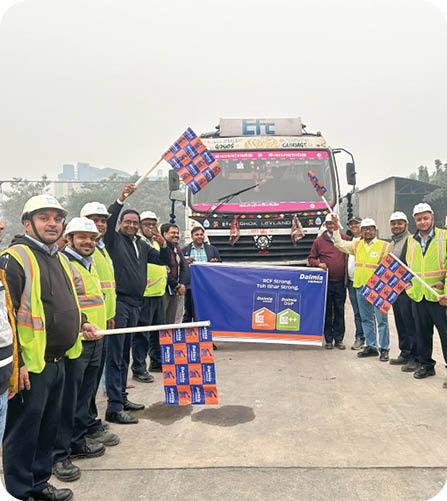
Safety Drive at Bokaro, Jharkhand
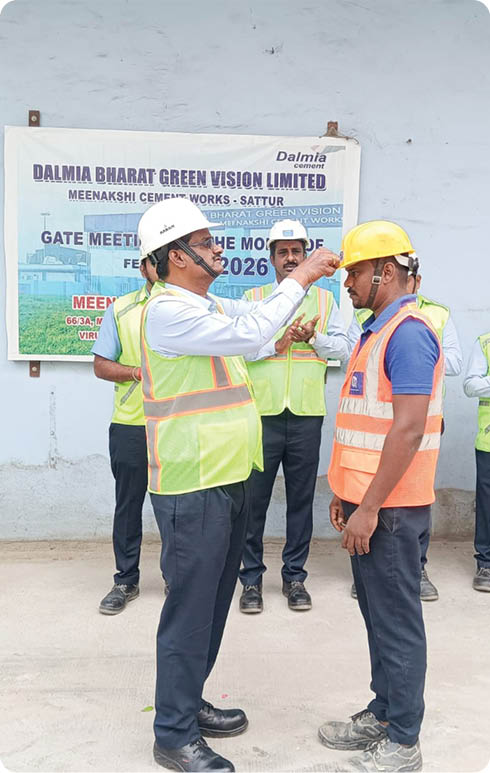
Safety Meet at Sattur, Tamil Nadu

Culture, Engagement and Recognition

A strong safety culture is sustained through continuous engagement, recognition and shared ownership. In FY 2025-26, we focussed on reinforcing positive behaviours and encouraging active participation across the workforce.

Key Initiatives

  • Monthly safety themes and engagement programmes
  • Monthly online competency quizzes aligned with the monthly theme
  • Monthly safety gate meeting
  • Recognition platforms for safety performance
  • Internal programmes to identify and replicate best practices across units

Outcomes

  • Increased workforce participation in safety initiatives
  • Stronger culture of recognition and accountability
  • Continuous sharing of safety innovations

Performance Snapshot

25
Awards Received (National/State-Level/External Agencies)
1,590
Safe Workers of the Month
447
Safe Staff of the Month
453
Safe Sub-Contractors of the Month
4,633
Safe DCBL Executives of the Month and Other Safety-Related Unit-Based Awards/Rewards, including Staff and Workers, During the Monthly Safety Gate Meeting

Lead Indicators

49,960
Unsafe Acts (UA) Reported
49,958
Unsafe Acts (UA) Complied
80,445
Unsafe Conditions (UC) Observed
79,590
Unsafe Conditions (UC) Complied
5,079
Near-Miss Incidents (NMI)
13
High Potential Incidents (HiPo)
1,047
Work Stoppages Against Violations
147
Mock-Drills and Fire-Drills
299
Gate Meetings
2,283
CFSA Contractor Field Safety Audits
198
Model Areas Developed
1,495
Safety Committee Meetings
3,11,329
Total Training Hours
1,29,428
TBT Sessions
17,82,831
Number of TBT Participants

Lagging Indicators

7
Lost-Time Incidents (LTI)
5
Fatalities
0.12Per Mio MH
LTIFR
0.20Per Mio MH
TRIFR

Award-winning Excellence

Our uncompromising safety culture and rigorous operational protocols were recognised by external regulatory and industry bodies through multiple prestigious accolades during the year.

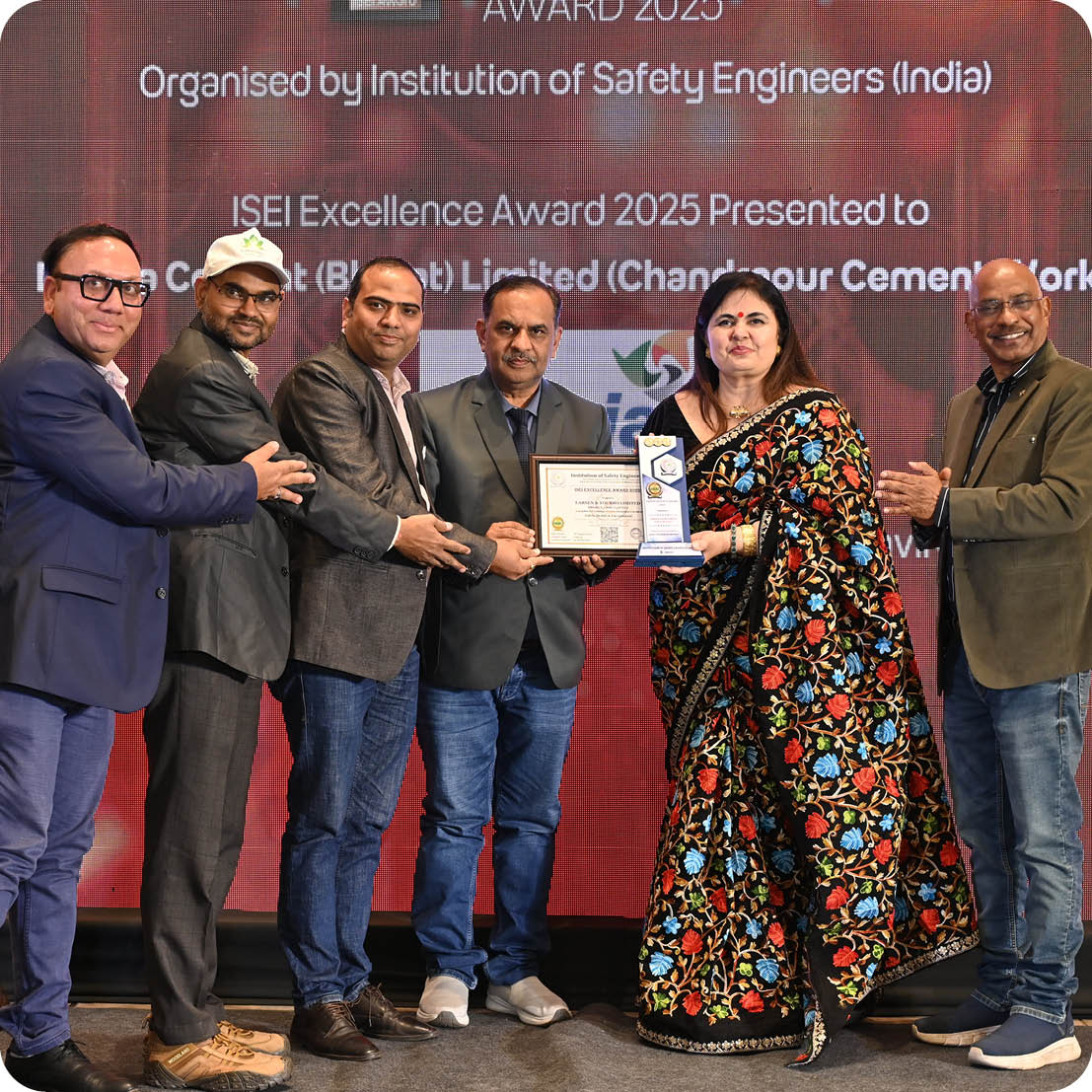
Rohtas Cement Works was recognised for Occupational Health and Safety in the Cement Sector at the Honourz Excellence Awards 2025.

Our manufacturing units at Dalmiapuram, Ariyalur, Sattur and Rohtas received collective recognition across multiple dimensions, including Excellence in Productivity, Energy Efficiency, CSR, and Environmental Excellence.

Demonstrating our commitment to sustainable mining, the mines at Chandrapur Cement Works were honoured with multiple top-tier awards during the 36th Mines Environment & Mineral Conservation Week FY 2025-26 hosted by the Indian Bureau of Mines.

Way Forward: Scaling Safety with Growth

We are building a safety ecosystem that is predictive, integrated and behaviour-led.

Key Priorities Ahead

  • AI intervention with digital safety solution.

  • Contractor Safety Management.

  • Digitalisation of permit to work system.

  • Digitalisation of Audit management system.

  • AI capabilities for incident prediction.

  • Boots On Ground: QR code and geo-fencing technology to enhance field monitoring and inspection effectiveness.

Safety Training at Umrongso, Assam

Partnering India’s Inclusive Growth Journey

Dalmia has always been rooted in Bharat’s Community Development journey. To us, growth is meaningful only when it is inclusive, empowering communities to build resilience, unlock opportunities and shape their own futures. Guided by this belief, our community initiatives focus on creating lasting socioeconomic impact, strengthening local ecosystems and enabling inclusive development across regions. This shared journey forms the foundation of a truly sustainable enterprise, where business success and community well-being advance together in support of a stronger nation.

Performance Snapshot

Sustainable Livelihoods

5,456

Youth Trained in FY 2025-26 with a


75%

+ Placement Rate through 27 DIKSHa Centres

33,800+

Households Covered under Gram Parivartan

Up to Rs. 1.5 lakh

Annual Income per Participating Household

1,000+

Households Supported with Microenterprises

Climate Action and Water Security

6.18 lakh KL

(6,18,425 m³) Annual Capacity Built Across Regions

8,000+

Farmers/Households Supported through Irrigation and Water Access

585.60

Hectares Degraded Land Under Watershed Rehabilitation (Manami Project)

Strengthening Social Infrastructure

55,000+

Individuals Reached through Integrated Healthcare Initiatives

2,622

Individuals Digitally Trained;

1,700+

Supported via School Infrastructure Upgradation

23,300+

Beneficiaries Impacted through Community Asset Creation and Upgradation

“At Dalmia Bharat, we seek to accelerate the social, economic and environmental progress of our local communities by equipping them with the capabilities, resources and infrastructure needed to thrive independently. We foster self-reliance, create sustainable livelihood opportunities, and strengthen community resilience. In doing so, our interventions act as economic multipliers, ensuring that corporate growth and community prosperity advance hand in hand.”

Mr. Ashok K. Gupta

CEO, Dalmia Bharat Foundation

Building Linkages Across
Capital

Social & Relationship Capital

Strategies
  • Build Strong and High Performance Organisation
  • Deliver Measurable Sustainability Impact
Material Issues
  • Biodiversity Conservation
  • Circular Economy
  • GHG and Climate Change
  • Waste Management
  • Water Stewardship
  • CSR/Community Development
Risks
  • Regulatory and Legal Risk
  • Climate Risk
Stakeholder
  • Employees
  • Communities
SDGs
SDG 6 SDG 7 SDG 11 SDG 12 SDG 13 SDG 15

At Dalmia Bharat, our community interventions purposefully transcend the boundaries of traditional philanthropy. Dalmia Bharat’s Foundation story has been inextricably rooted in partnering with communities in a shared journey of progress. Our initiatives act as powerful economic multipliers that equip local ecosystems to thrive independently, reducing vulnerability to external shocks and creating cycles of generational wealth.

Across our operational footprint, we are shifting the paradigm from passive assistance to active economic enablement. This means building scalable, self-sustaining micro-economies, future-proofing local civic infrastructure, and systematically empowering the rural youth to become active architects of an ascendant Bharat. When rural economies flourish, they stabilise supply chains, foster localised innovation, and create a robust social license to operate. Guided by our core values, our focused interventions in livelihood development, climate action, education, healthcare, and rural infrastructure prove that corporate growth and community prosperity are deeply interconnected.

CSR of Dalmia Bharat Limited is implemented through its Corporate Foundation - Dalmia Bharat Foundation.

Overall Footprint Impact

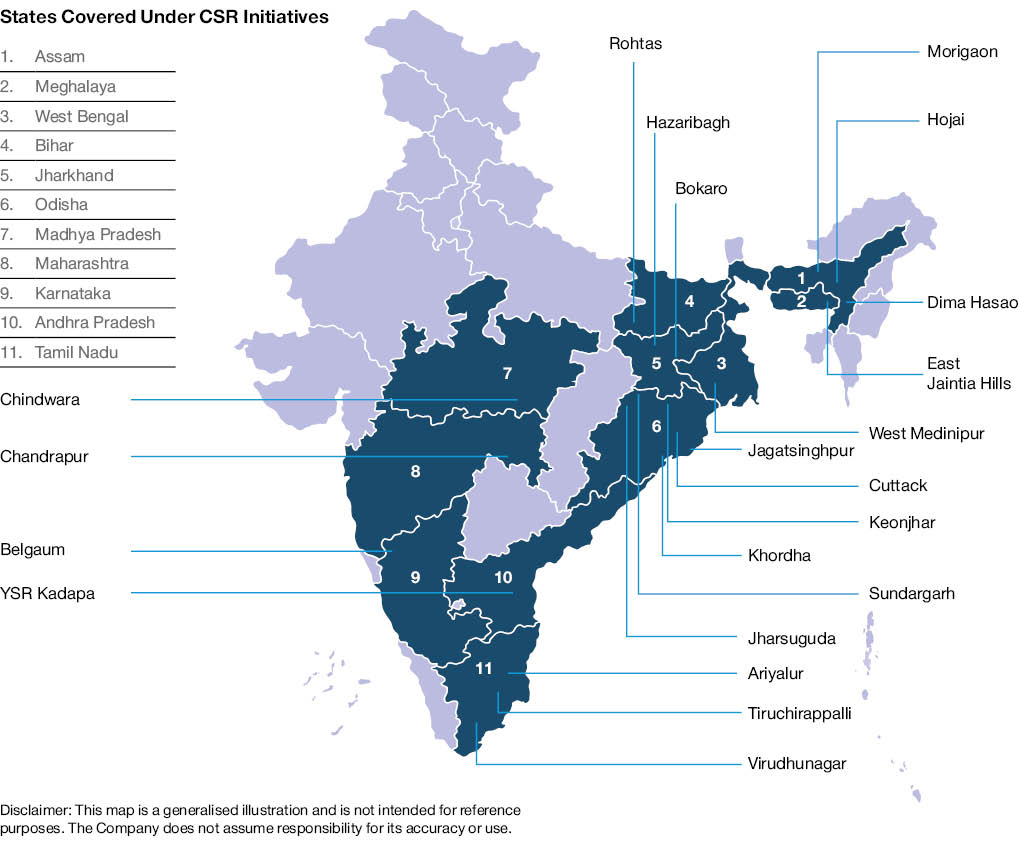
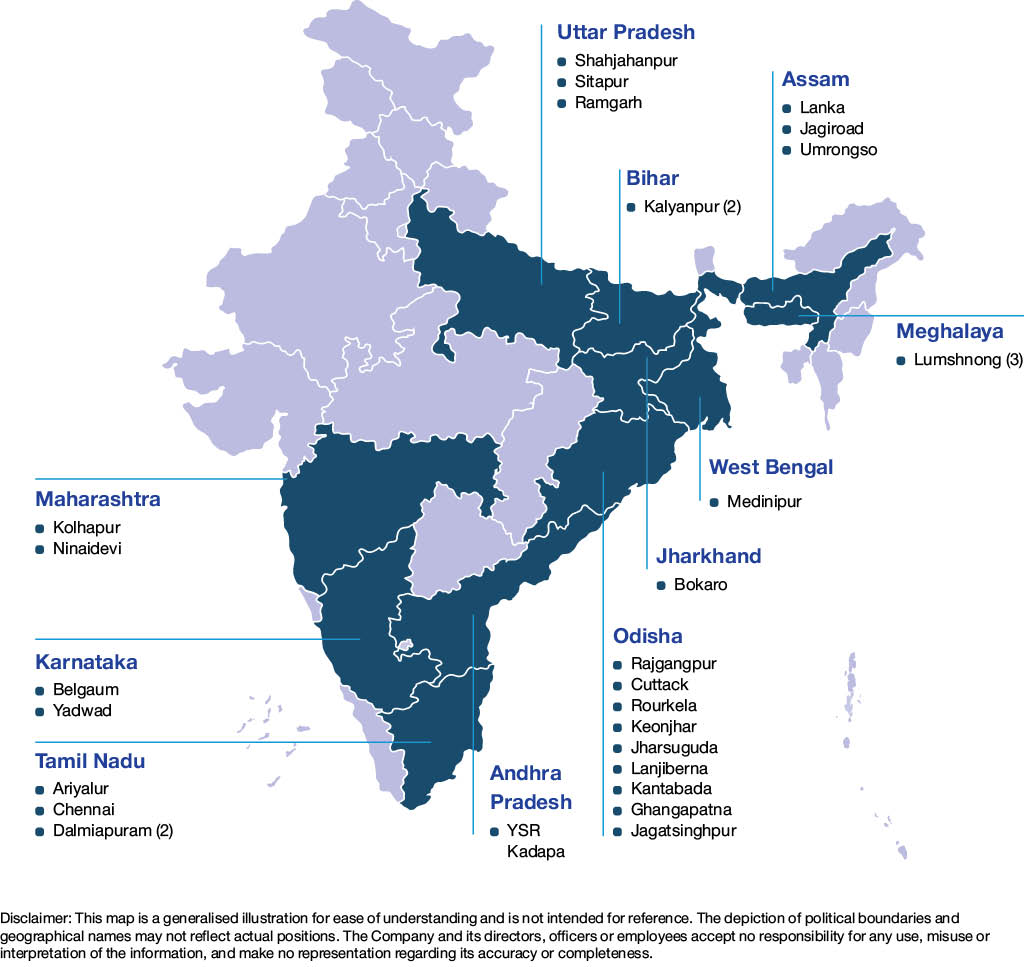
11 States
of Operation
21 Districts
Covered by Our Social Interventions
2,05,000+
Total Individuals Benefitted in FY 2025-26

States Covered Under CSR Initiatives

Livelihood
Development
Climate Action
Education
Healthcare
Community
Infrastructure

CSR Focus Areas

1 Sustainable Livelihoods
  • DIKSHa A skill development initiative
  • Gram Parivartan A livelihood enhancement programme
2 Climate Action
  • Soil and water conservation
3 Social Infrastructure
  • Health
  • Education
  • Rural Infrastructure

Area 1: Sustainable Livelihoods

Recognising that financial independence is the absolute bedrock of community resilience, Sustainable Livelihoods has emerged as the most critical focus area for CSR. Poverty is rarely just a lack of income; it is a lack of opportunity, skills and access to capital. Our approach ensures that all interventions are income-generating, socially equitable, and ecologically sustainable, giving individuals the tools they need to navigate a rapidly changing economic and environmental landscape.

Skilling Bharat for Tomorrow

DIKSHa – Dalmia Institute of Knowledge and Skill Harnessing

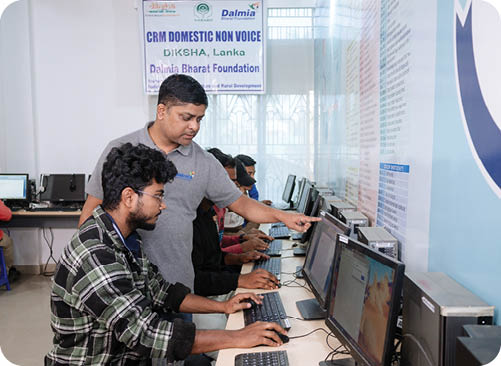
There is a glaring gap between the theoretical education rural youth receive and the practical, specialised skills demanded by India’s rapidly modernising industrial sector. DIKSHa bridges this employability gap by offering meticulously designed, placement-linked courses in high-demand sectors such as healthcare, retail, IT, power, apparel and textiles. Since its inception in 2016, our flagship initiative, DIKSHa, has grown to 32 centres (through Dalmia Bharat Foundation) across 11 states, with an annual training capacity of over 9,000 youth. More than 60% of the trainees are women, reflecting the programme’s strong focus on inclusive and gender-responsive skilling.

DIKSHa currently offers 24 short-duration courses ranging from 2–4 months, all accredited under the NSDC/NSQF framework to ensure industry relevance and national recognition. Beyond certified technical training and soft-skills development, the centres also provide career guidance and counselling support to help youth transition successfully into the workforce. The programme has consistently achieved over 75% placement and nearly 70% retention among placed candidates, demonstrating the effectiveness and sustainability of its skilling model.

DIKSHa Centre at Kalyanpur, Bihar
11 States
32 Operational Centres
75%+
Placement
60%+
Women Participation
Key Highlights FY 2025-26
6,953 Trained
5,151 Placed
Cumulative Progress Since 2016
29,642 Trained
22,551 Placed

Partnerships

To ensure high-quality, industry-aligned skilling, DIKSHa leverages strategic partnerships with corporates, industry bodies, content providers and technical institutions. These collaborations support the programme through financial contributions towards infrastructure and operations, curriculum enrichment, trainee learning models, and certification support. While partnerships strengthen the ecosystem, all DIKSHa centres are directly operated and managed by the programme team, ensuring consistent quality, governance, and community connect across locations.

Our DIKSHa Partners

Way Forward and Key Partnerships Undertaken

With an existing annual training capacity of over 9,000 youth, DIKSHa aims to scale its outreach to 30,000 youth annually by FY 2029-30. To achieve this vision, the programme seeks to strengthen partnerships with industry leaders and State Skill Missions for infrastructure support, operational sustainability, curriculum enrichment, and placement linkages. During FY 2025-26, the following strategic partnerships were undertaken to further strengthen and expand the DIKSHa ecosystem:

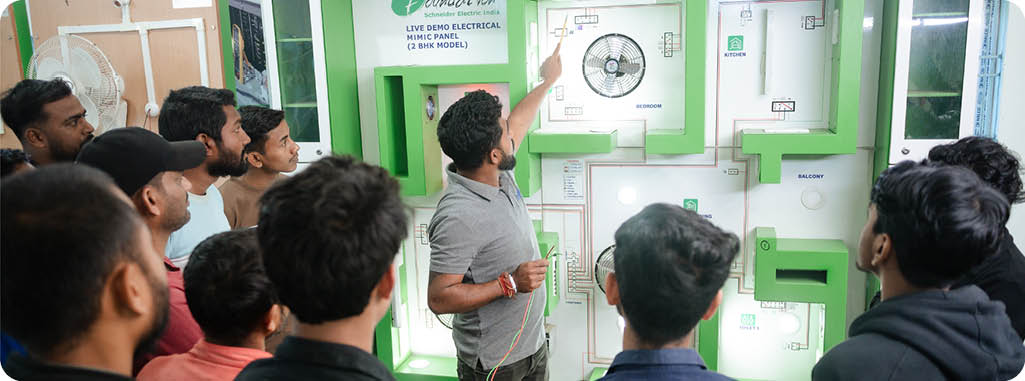
Signed a major MoU with Schneider Electric for setting up electrical labs in 30 ITIs across Tamil Nadu, expected to impact over 11,000 youth over three years. Additional refurbishment support was also extended to 8 ITIs across five states.

Signed an MoU with Saint-Gobain to establish specialised training in Drywall and False Ceiling systems at DIKSHa Rajgangpur, Odisha, with an annual training capacity of 120 youth. The partner is supporting the complete infrastructure setup, while DBF manages operations and training delivery.

Signed an MoU with Red Carpet to train 720 women annually across eight DIKSHa centres in automotive and tele-calling-related job roles, promoting greater workforce participation among women.

Signed an MoU with Wadhwani Foundation to introduce hybrid digital learning modules on Employability Skills and Entrepreneurial Mindset, expected to benefit over 9,000 youth annually across DIKSHa centres.

Signed an MoU with Lal PathLabs Foundation to launch the ‘DIKSHa – LPL Academy for Laboratory Medicine’ in Belgaum and Ranchi for phlebotomy training, with an annual capacity of 350 youth.

Signed an MoU with Athulya to establish a new DIKSHa centre in Chennai under an infrastructure-sharing model, with an annual training capacity of 150 youth and future expansion plans.

Collaborated with Vishwa Yuvak Kendra to organise a seminar on ‘Youth Empowerment through AI and Digital Skills’ and signed an MoU to support mobilisation activities for upcoming DIKSHa centres in Delhi-NCR, Bhubaneswar and Guwahati.

Established a new DIKSHa centre in Jagatsinghpur, Odisha, in partnership with the Odisha Skill Development Authority with an annual training capacity of 240 youth in Assistant Electrician and Retail Sales Associate trades.

Signed MoUs with Armstrong and Sahana to establish two residential DIKSHa centres in Odisha for Sewing Machine Operator training, with a combined annual training capacity of 600 youth.

Cultivating Rural Micro-Economies: ‘Gram Parivartan’

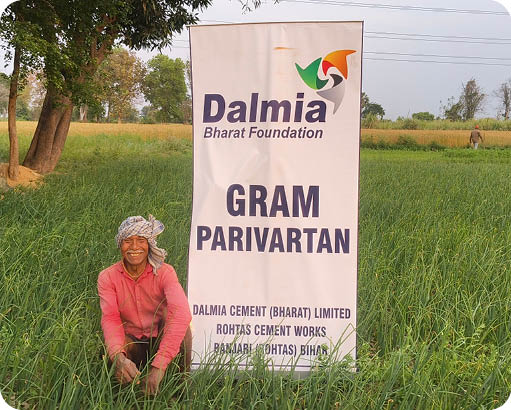
The ‘Gram Parivartan’ project was designed to address the deep-rooted structural fragility of rural incomes. In many of our operational areas, fragmented landholdings, erratic weather patterns, and a lack of reliable irrigation make solo farming a high-risk endeavour. A single failed monsoon can push families into devastating cycles of debt. By driving systemic transformation at the grassroots level, we help households diversify their income streams across multiple channels, including livestock, horticulture and micro-enterprises. This creates a financial safety net, ensuring they are no longer perilously dependent on a single harvest.

Gram Parivartan Scale and Reach

  • 45,118 Households Mapped (86% of Target Demographic Identified through Baseline Surveys)
  • 80,000+ Total Interventions Deployed Across Farm, Off-Farm, and Non-Farm Sectors
  • 33,800 Households Covered (65% of the 52,000 Multi-Year Goal)
  • Rs. 1,50,000 Targeted Annual Income Enabled per Participating Household

Agricultural and Skill Enhancement

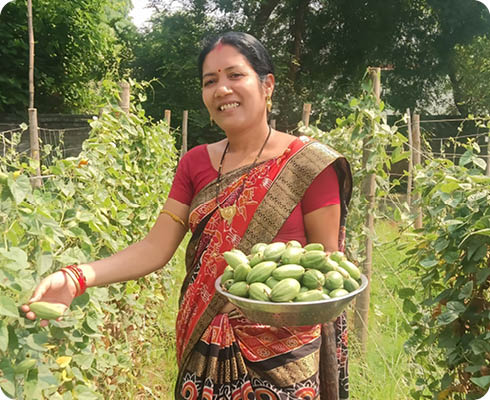
We actively support farmers through highly localised precision farming models. By shifting to 10-cent and 25-cent agricultural models, we prove that even marginal landholdings can yield high returns when managed scientifically. Farmers are equipped with high-yield seeds (including green peas, potato, chilli, paddy, onion, and parwal), organic inputs, and intensive crop-specific training. Beyond the fields, we partner directly with Krishi Vigyan Kendras (KVK) and Rural Self Employment Training Institutes (RSETI) to provide non-farm vocational training. Beneficiaries master trades carefully selected based on local market demand, spanning tailoring, beauty and wellness, bangle making, embroidery, and jute bag production.

Agricultural and Skilling Impact

  • 4,745 Farmers Supported Across 7 Locations (Lanka, Ariyalur, Bokaro, Cuttack, Dalmiapuram, Rajgangpur, Kalyanpur)
  • Rs. 10,000 to Rs. 80,000 Localised Income Potential Unlocked per Season for Farming Households
  • 1,190+ Beneficiaries Trained in Non-Farm Vocations and Advanced Agricultural Practices Across 5 Locations

Micro-Enterprise Incubation

Many rural families possess a strong entrepreneurial drive but lack the technical scaffolding and seed capital needed to launch their ideas. DBF acts as a direct incubator for these grassroots businesses. We provide comprehensive business mentoring to help families launch or expand vital village-level services. These micro-enterprises range from salons, petty shops, fast food units, and grocery stores to readymade garment shops, mini rice sellers, electrical shops, and automobile repair units, ensuring that localised wealth circulates directly within the village economy.

Micro-Enterprise Impact

  • 506 Households Supported in FY 2025-26 with Business Mentoring Across 9 Locations
  • In Total 1,000+ Households were Supported under Micro-enterprises Development Initiatives
  • Up to Rs. 1 lakh Annual Income Potential Created per Entrepreneurial Household

The Livelihood Promotion Fund

Access to institutional credit remains one of the biggest hurdles for rural women, who often fall prey to local moneylenders charging exorbitant interest rates. The Livelihood Promotion Fund was explicitly designed to circumvent this systemic issue by providing timely, affordable capital directly to Self-Help Group (SHG) associations. Operating as a revolving fund, it serves critical initial investment and working capital needs, fostering a culture of financial discipline, collective governance, and female economic empowerment.

Promotion Fund Impact

  • 20 SHG Associations Formed, Acting as Umbrella Organisations for 222 Localised SHGs
  • 2,689 Women Members Benefitted Across 8 Locations (Ariyalur, Dalmiapuram, Medinipur, Rajgangpur, Cuttack, Kalyanpur, Chandrapur, Belgaum)
  • Up to Rs. 4 lakh in Capital Support Extended to Each Association as a Revolving Credit Line

Overall Progress

Engaged 19,200+ farmers and 3,614 individuals across the broader DBF livelihood ecosystem, including the empowerment of over 2,200 women

Region-specific Livelihood Projects

We recognise that a one-size-fits-all approach is ineffective in a country as geographically and culturally diverse as India. Our region-specific projects capitalise on the unique environmental and market strengths of localised landscapes, ranging from tribal orchards in Odisha to sustainable bamboo forestry in the Northeast.

WADI Development Project (Rajgangpur)

A transformative 5-year initiative launched in FY 2022-23 with NABARD to sustainably improve the livelihoods of tribal farmers. The WADI model focusses on converting marginalised land into productive assets through high-value orchards, while providing short-term income during the gestation period of the trees. We introduced exotic, drought-resistant crops like dragon fruit to diversify yields. To ensure no one is left behind, we also supported landless farmers with dedicated apiculture (beekeeping) and poultry units. Massive irrigation infrastructure was developed to protect these assets, further strengthened through a strategic convergence MoU with the Odisha Agro Industries Corporation (OAIC) for the installation of solar and electric river lifts.

WADI Project Impact

  • 500 Tribal Farmers Supported (420 with 1 Acre each; 80 Landless Farmers)
  • 420 Acres Developed with 31,500 Cashew and Mango Plants; 1,890 Trees Replanted for Gap-Filling
  • 58 Landless Beneficiaries Equipped with Poultry Farming Units (100 Sonali Birds each)
  • 37 Borewells Dug and 57 Water-Lifting Devices (46 Solar, 11 Electric) Installed
  • 20 River Lifts Sanctioned via an Rs. 81.70 lakh MoU with OAIC (16 Solar, 4 Electric Already Operational, Irrigating 100 Acres)

Bamboo Cultivation (Northeast)

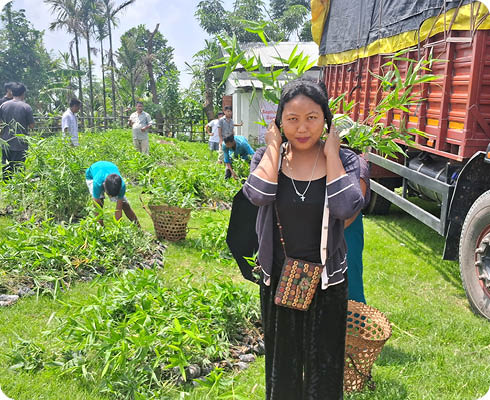
In partnership with GIZ, we are actively harnessing the natural abundance of bamboo in the Northeast. We are transforming it from a wild, unmanaged resource into a structured and profitable supply chain for biofuel and alternative livelihoods. This initiative, operating across Umrongso, Lanka, and Jagiroad, perfectly marries ecological conservation with long-term economic empowerment through guaranteed buy-back mechanisms.

Bamboo Cultivation Impact

  • 4,029 Farmers Actively Engaged in Sustainable Forestry
  • 3.25 lakh Bamboo Shoots Planted (Including a Massive Drive of 1.4 lakh Shoots by 700 Farmers in Umrongso in FY 2025-26)
  • Rs. 60,000 Potential Annual Income Created per Participating Farmer

Integrated Farming System Project (Ariyalur)

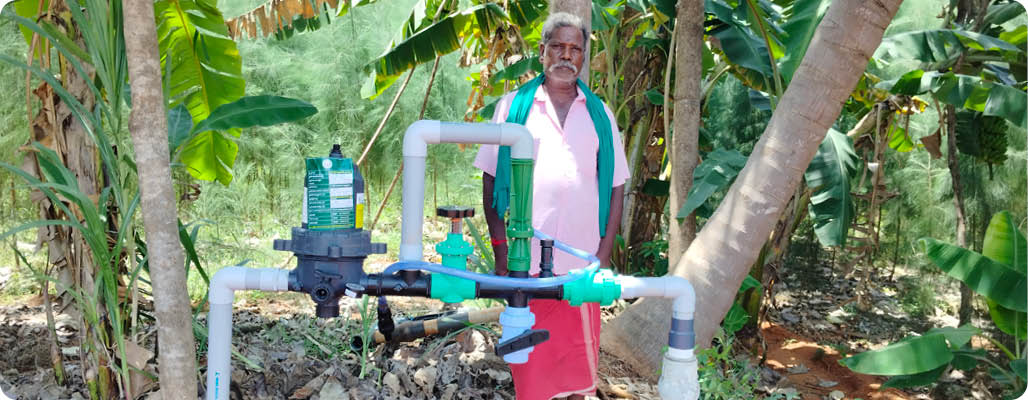
Partnering with NABARD, this project promotes highly integrated, climate-resilient agricultural practices. By seamlessly combining multi-cropping, horticulture, and livestock, farmers create a self-sustaining cycle where the waste of one system becomes the organic input for another, drastically reducing external costs. Farmers were provided with vital inputs, including maize, vegetables, fruit-bearing plants, Azolla units for organic fodder, and vermicompost beds. We also optimised water usage through modern micro-irrigation systems and organised vital exposure visits to regional research centres so farmers could observe these best practices firsthand.

Integrated Farming Impact

  • 1,132 Farmers Oriented, with 70 Specialised Model Farms Established as Live Demonstration Sites
  • 50 Farmers Trained via an Intensive 3-day KVK Programme and Supplied with Multi-Crop Inputs
  • 15 Farmers Equipped with Modern Micro-Irrigation Systems (Drip and Pipe)
  • Rs. 30,000–Rs. 60,000 Sustainable Annual Income Potentiald Generated per Farmer

Voices of Change

Case Study

Strengthening Farm Productivity and Rural Enterprise

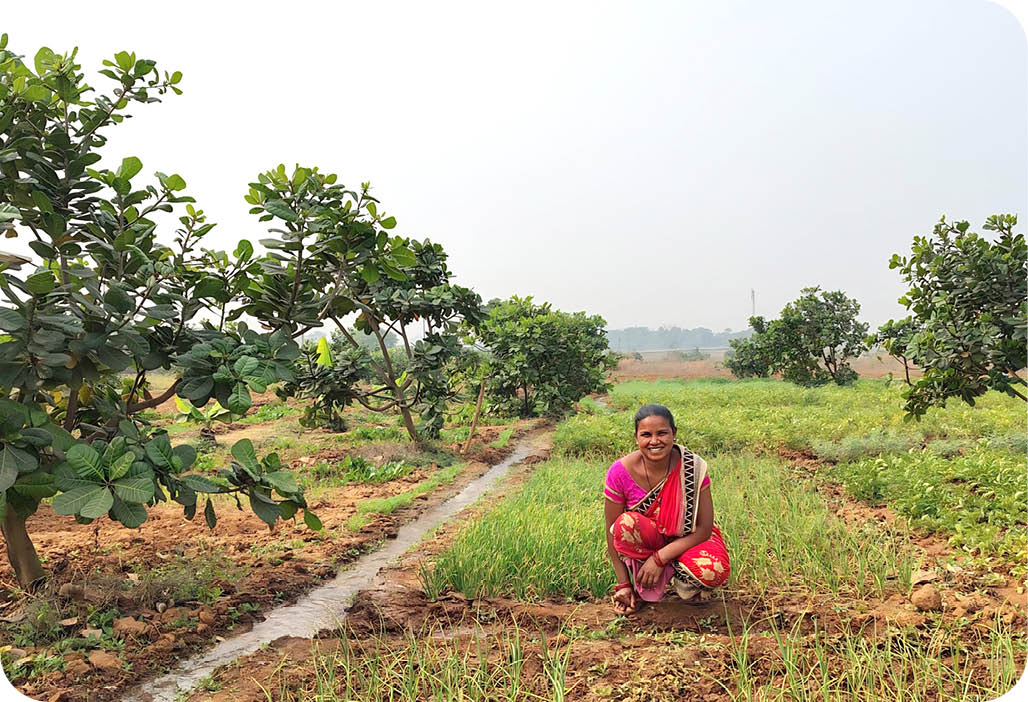
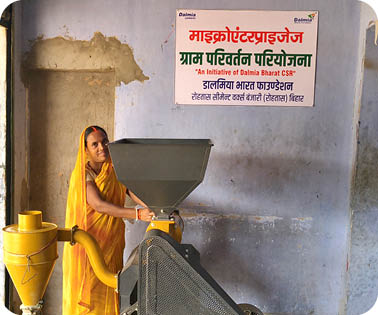
Seema Devi, based in Banjari, Bihar, was earlier dependent on low-productivity agriculture and an underutilised flour mill, limiting the stability of her household income. Through the Gram Parivartan programme, she adopted improved agricultural practices, including the use of organic inputs such as Jeevamrut and high-yield seeds for crops like potato, onion, and garlic.

Alongside enhancing farm output, Seema revived her flour mill and expanded operations by adding a rice sheller, creating an additional income stream. This shift enabled her to diversify her livelihood and reduce dependence on a single source of income.

Today, she earns approximately Rs. 1,89,000 annually, reflecting improved productivity, better resource utilisation, and a more stable household income structure.

Case Study

Skill Development Enabling Sustainable Career Growth

Mr. Akash Das, from Azarbari village in Lanka, belonged to an economically disadvantaged family and aspired to build a stable livelihood to support his household. Through the DIKSHa Centre in Lanka, he underwent skill training and developed technical competencies as an Assistant Electrician, strengthening his employability and career prospects.

Leveraging his training and dedication, Akash secured employment with People Tree Pvt. Ltd., creating a sustainable source of income for his family. This opportunity not only enhanced his financial stability but also enabled him to pursue long-term career growth.

Today, he earns an annual salary of approximately Rs. 3,00,000, reflecting the positive impact of skill development in improving livelihoods and fostering economic self-reliance among rural youth.

Area 2: Climate Action and Water Security

In India’s agrarian heartlands, water is not just a resource; it is the primary engine of the local economy. Erratic monsoons and depleted aquifers threaten both food security and community stability. By integrating traditional watershed rejuvenation wisdom with modern, highly efficient micro-irrigation techniques, we are systematically building drought-resistant, water-resilient villages. We undertook massive civil works to deepen tanks, clear miles of blocked canals, and construct robust check dams. In areas facing acute drinking water scarcity, we installed high-capacity community water tanks powered by deep borewells and solar pumps.

Water Conservation and Rejuvenation Impact in FY 2025-26

  • 6.18 lakh KL (6,18,425 m³) Total Annual Water Harvesting Capacity Created
  • 8,000+ Households/Farmers Directly Benefitted Across Multiple States

Region-Specific Impact

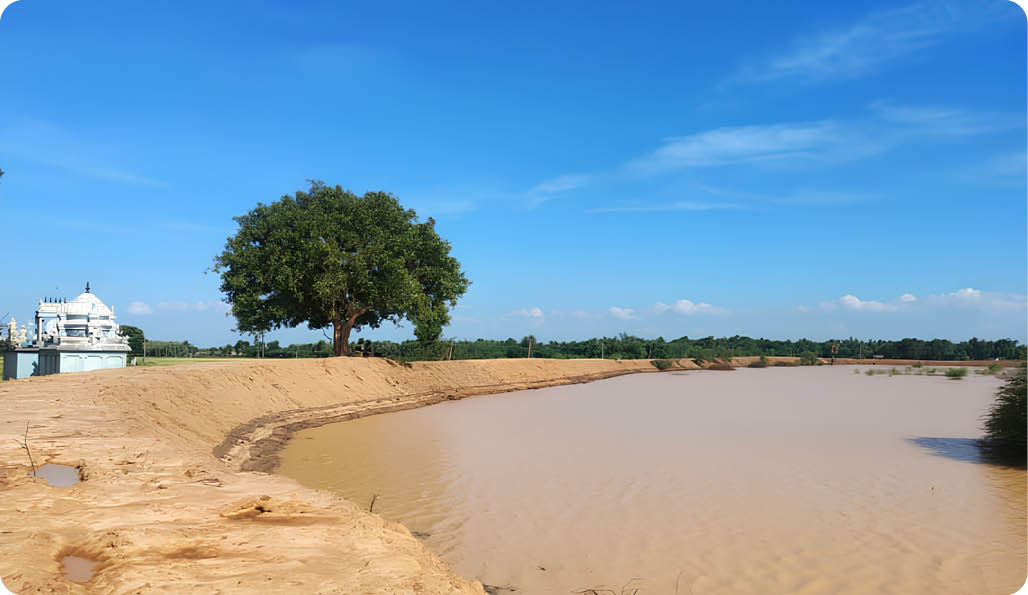
  • 5,32,875 m³ Capacity Unlocked in Dalmiapuram by Deepening Two Critical Micro-Irrigation Tanks
  • 3.5 km of Vital Canals Cleared in Dalmiapuram, Restoring Irrigation Across 400 Acres for 200 Farmers
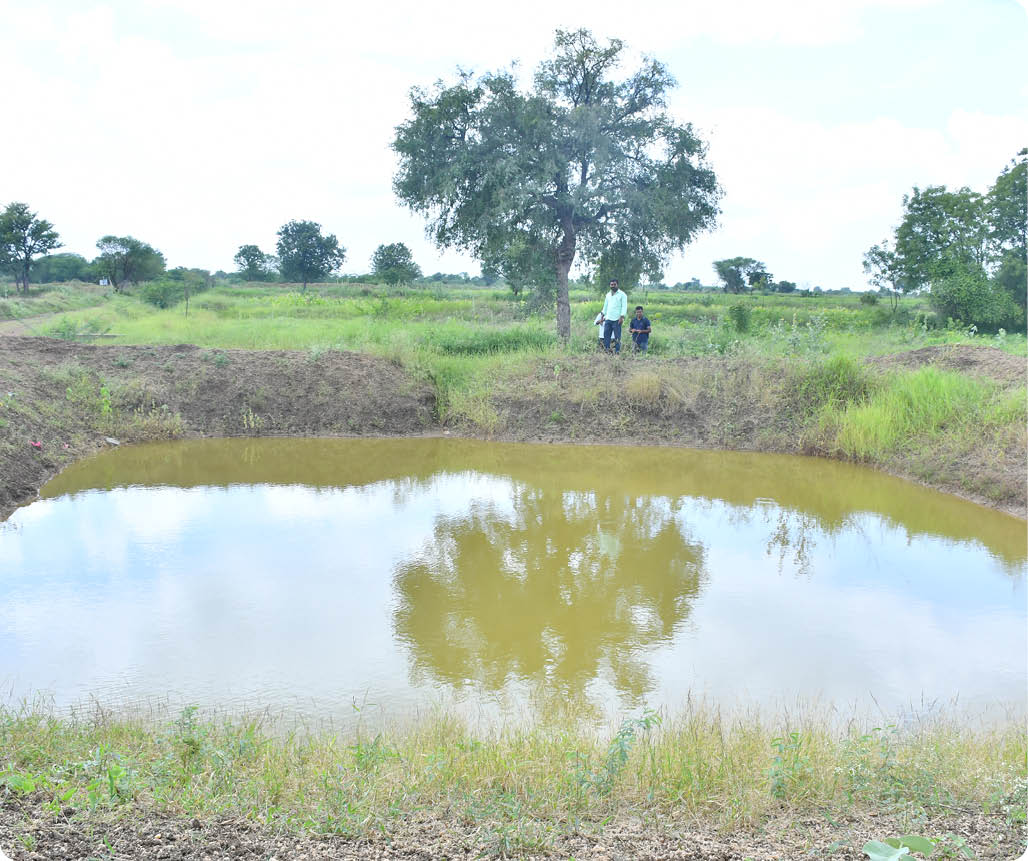
  • 57,000 m³ of Water Conserved in Ariyalur through the Deepening of Community Tanks and Deployment of Drip Irrigation Across 16 Acres
  • 11,375 m³ of New Capacity Created in Bokaro through Heavy-Machinery-Assisted Pond Deepening, Serving ~7,000 Individuals
  • 7,337 m³ Harvested in Belgaum through Hyper-Local Farm Ponds and Extensive Drip Irrigation
  • 5,381 m³ Capacity Restored in Cuttack through the Holistic Desilting and Renovation of 6 Traditional Village Ponds
  • 150 Individuals Secured with Safe Drinking Water in Lanka via the Installation of a Solar-Powered PVC Water Tank System
Check Dam at Ariyalur, Tamil Nadu

Manami Watershed Development Project (Belgaum)

In strategic partnership with NABARD, this ambitious ‘ridge-to-valley’ project aims to completely rehabilitate severely degraded soil across the villages of Hulkund, Kunal, and Yadawad. It is a long-term investment in restoring the earth’s natural hydrological cycles by capturing surface runoff before it causes soil erosion. To support these infrastructure efforts, we established a community-led Custom Hiring Centre to democratise access to modern farming machinery at subsidised rates. Furthermore, we transitioned farmers away from chemical dependency by supporting them with organic inputs, rigorous seed treatment protocols, and organic pest management techniques. To ensure long-term resilience, we invested heavily in capacity building, taking farmers on exposure visits to leading agricultural institutes and installing real-time weather forecasting technology.

Manami Watershed Impact

  • 585.60 Hectares of Severely Degraded Land Slated for Holistic Rehabilitation
  • 2,335 KL Storage Capacity Constructed via 3 Strategic Farm Ponds and 1 Sunken Pond
  • 5,000 m³ Single-Fill Capacity Introduced through Advanced Drip Irrigation Systems
  • 400–500 Local Farmers Supported with Affordable Mechanisation via the Custom Hiring Centre
  • 30 Farmers Successfully Transitioned to Organic Inputs and Sustainable Agriculture Protocols
Pond Desilting at Cuttack, Odisha

Area 3: Strengthening Social Infrastructure

A community cannot reach its true economic potential if it is constantly battling preventable diseases, lacks fundamental educational infrastructure, or suffers from poor civic amenities. Poor infrastructure acts as a ‘poverty trap’, where a single medical emergency or the inability to safely transport goods can wipe out years of financial progress. We aggressively invest in health facilities, digital and physical school infrastructure, and the construction of safe, functional public spaces to drastically elevate the baseline quality of rural life.

Accessible Healthcare and Sanitation

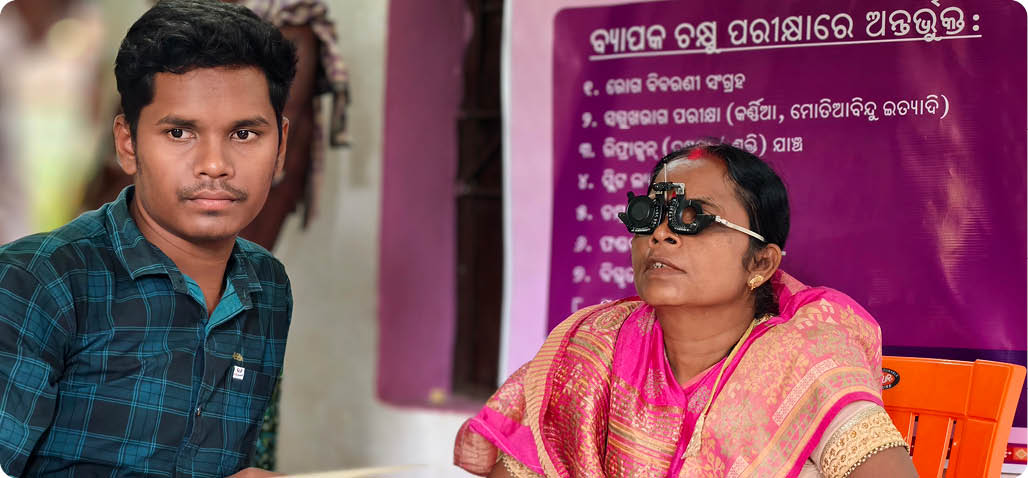
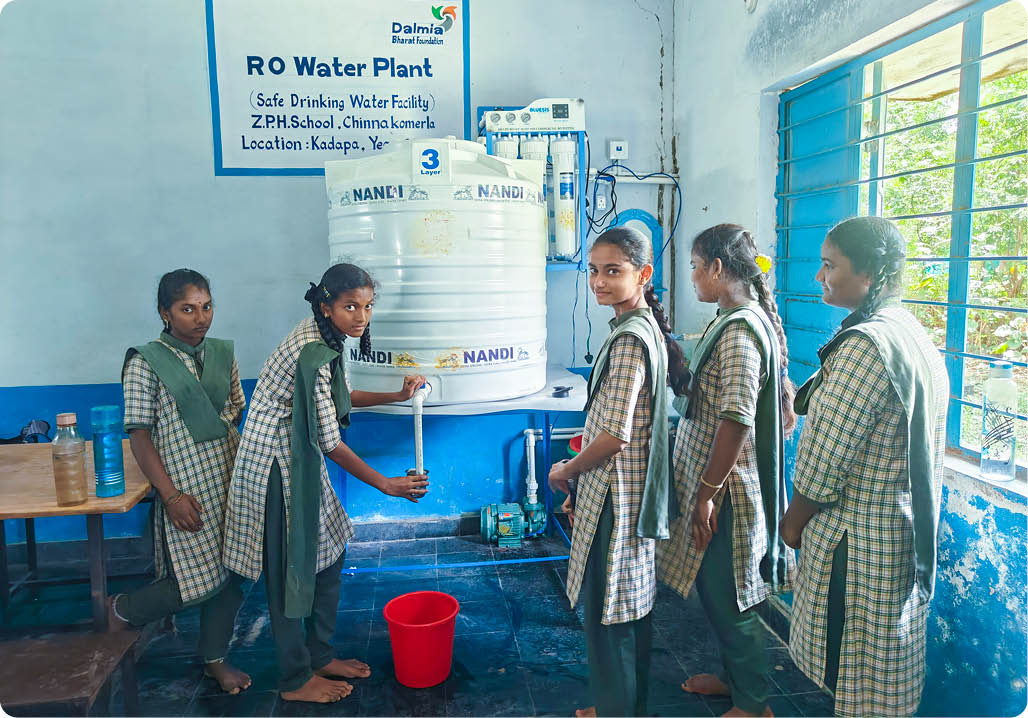
Our healthcare strategy is deeply integrated, combining preventive care, immediate relief, and systemic institutional support. We deployed fully equipped Mobile Medical Units (MMUs) in difficult-to-access mining areas to bring primary healthcare directly to communities. During peak summer months, we provided immediate relief via safe drinking water stations and emergency tanker deployments. We also moved aggressively on preventative healthcare efforts by organising specialised health camps and administering vital pulse polio vaccinations. Furthermore, we fortified under-resourced government healthcare facilities by supplying critical infrastructure like medical refrigerators for vaccines, patient monitors, and sterile surgical kits. We also supported TB patients with comprehensive nutrition regimens and tackled water contamination by installing commercial-grade RO units in schools.

Healthcare Impact

  • 55,000+ Individuals Benefitted Cumulatively Across all DBF Healthcare Initiatives
  • 19,707 Individuals Screened and Treated via MMUs in Remote Mining Areas (Chhindwara, MP and Hazaribagh, Jharkhand)
  • 10,200 Beneficiaries Provided with Immediate Water Relief via Jalchatra and Tankers in Rajgangpur, Cuttack, and Chandrapur
  • 5,200 Individuals Secured Better Care through Medical Equipment Supplies to Local Clinics Across 4 Locations
  • 3,300+ People Safeguarded from Waterborne Illnesses via RO Unit Installations in Schools and Public Offices
  • 2,571 Beneficiaries Administered Pulse Polio Vaccinations in Support of National Eradication Efforts
  • 2,165 Individuals Provided with Free Preventive Consultations Across 10 Specialised Health Camps
  • 504 TB Patients Supported with Comprehensive 6-Month Nutrition Kits to Ensure Treatment Adherence

Education and Grassroots Talent Development

Education is the ultimate equaliser. We invest deeply in both physical school infrastructure and modern digital pedagogy to ensure rural children are not left behind in the 21st-century economy. Interventions included constructing protective stage sheds, building hygienic kitchen rooms for mid-day meals to boost attendance, and executing campus beautification initiatives. To bridge the digital divide, we installed fully equipped smart classrooms and deployed mobile digital literacy buses. We also supplied heavy-duty bench desks, educational materials, and library furniture to resource-starved schools, alongside specialised educational kits for children with disabilities and essential board exam preparation materials. We also passionately support grassroots sports to foster discipline, teamwork, and community cohesion.

Education and Sports Impact

  • 4,000+ INDIVIDUALS ENGAGED in Sports via the Distribution of Athletic Kits and Sponsorship of the 69th National School Games (U-14 Girls Volleyball)
  • 2,622 Individuals Trained in Digital Literacy via Mobile HP WOW/CSL Project Buses
  • 1,772 Students and Community Members Supported via Major School Infrastructure Upgrades in Kadapa, Lumshnong, and Chandrapur
  • 591 Students Benefitted from Vital HSC Test Papers (Rajgangpur) and Special Education Kits (BIRDS School, Belgaum)
  • 582 Students Empowered via 3 Newly Installed Interactive Smart Classrooms in Government Schools in Belgaum
  • 249 Students Provided with a Dignified Learning Environment through the Distribution of Bench Desks and Library Furniture in Cuttack, Belgaum, and Chandrapur

Safety, Civic Mobility and Community Infrastructure

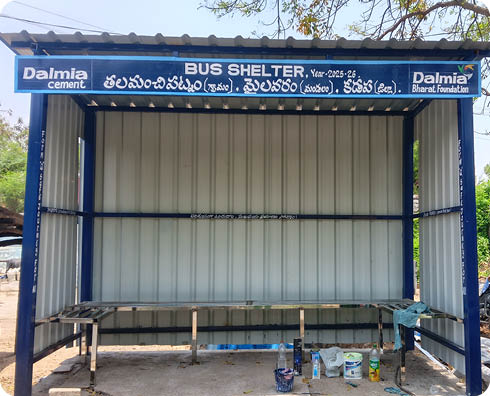
These physical investments have profound social implications, improving safety for women at night, ensuring farmers can transport produce to markets, and providing dignified spaces for community gatherings. We undertook the repair and construction of community halls, hygienic kitchen sheds, protective bus shelters, public toilets, Anganwadis (childcare centres), and critical drainage systems. We constructed vital rural roads to improve access for ambulances and agricultural transport. We also installed high-visibility solar lighting units to extend safe active hours, placed heavy-duty road safety barricades at known accident blackspots, and drove massive community plantation and waste management initiatives.

Community Infrastructure Impact

  • 23,300+ Beneficiaries Impacted by the Construction and Heavy Repair of Community Halls, Anganwadis, and Civic Assets
  • 17,500 Beneficiaries Secured Safer Night Mobility via the Installation of 152 Solar/LED Lighting Units and Tower Lights
  • 2,600 People Provided with Immediate Nutritional Relief via One-Day Meals and Grocery Support in Jagiroad
  • 1,322 Beneficiaries Engaged in Environmental Stewardship through Plantation Drives, Tree Guards, and Waste Management Initiatives
  • 275 Individuals Living in Orphanages and Old -Age Homes Supported with High-Quality Furniture to Improve Living Conditions
  • 275 Beneficiaries Educated on Civic Rights through Extensive E-waste and Government Scheme Awareness Campaigns
  • 1.75 km of Vital Rural Roads Constructed in Kadapa and Rajgangpur to Improve Connectivity for Agricultural Communities
  • 80 Heavy-Duty Road Safety Barricades Placed at Severe Accident-Prone Locations in Ariyalur and Dalmiapuram

Key Institutional Recognitions of the Year

Our commitment to transparency, ethical governance and impactful execution on the ground continues to be recognised by some of India’s most respected institutional platforms.

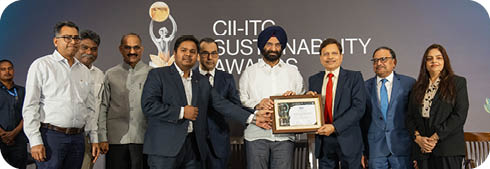
  • 20th CII–ITC Sustainability Award: Dalmia Bharat was honoured with the coveted ‘Significant Achievement’ award under the Domain Excellence category for Corporate Social Responsibility.
  • National CSR Summit (Times Foundation): DBF received the distinguished Institutional Honour in CSR from the Vice President of India.
  • CRISIL Rating VO 1A: Successfully achieved the highest possible grading (VO 1A) from CRISIL, signifying very strong delivery capability, impeccable financial proficiency and total transparency.
  • Industry Publications: The DIKSHa programme was featured prominently as a best-practice model in the CII Compendium on Rural Development and highlighted in FICCI’s ‘Skill & Empower.’
  • Sewa Diwas (Founders’ Day): Mobilised our workforce to reach over 23,600 individuals through localised community engagement events, publicly rewarding 77 Gram Parivartan and other top-performing beneficiaries, while also honouring best-placed DIKSHa alumni.

Assessing Our Social Returns

We view CSR not as a sunk cost but as an investment in human and environmental capital. The returns on these investments are rigorously tracked and measured to ensure maximum social yield.

Key Performance Indicators
Metric FY 2024-25 (Baseline) FY 2025-26 (Current) Progress
CSR Expenditure Rs. 19 crore Rs. 18 crore In line with CSR law
Total Individuals Reached 91,000+ 2,05,000+ Scale-up
Gram Parivartan: Households Covered 24,790 33,800 +32.3%
DIKSHa Placement Rate 75% 75%+ Industry-leading
Water Harvesting Capacity 2.44 lakh KL 6.18 lakh KL Ecological impact

Institutionalising Impact Assessment

Starting April 2026, DBF has rolled out a comprehensive, multi-year impact assessment framework dedicated to the DIKSHa and 'Gram Parivartan' programmes. Outputs, such as what we spent or built, towards a deeper understanding of outcomes and how lives have been transformed. By tracking longitudinal income growth, social mobility and intergenerational shifts, we ensure that our social capital investments continue to yield enduring and compounding prosperity for decades to come.

Building Pride in Bharat through Conservation of National Heritage

Dalmia Bharat was honoured to be selected as a ‘Monument Mitra’ under the Government of India’s ‘Adopt a Heritage’ initiative in 2018. What began with the upgradation of tourist infrastructure and enhancement of visitor experience at the iconic Red Fort through state-of-the-art amenities and immersive storytelling has since expanded to five additional monuments in Delhi under ‘Adopt a Heritage 2.0’. The initiative is implemented in collaboration with our partner, Sabhyata Foundation.

Across all heritage sites, several visitor-centric, cultural and site enhancement initiatives were undertaken during the year. Common interventions included the operations and maintenance of toilet facilities and RO plants, construction of new toilet blocks, installation of CCTV surveillance systems to strengthen security, and provision of accessibility support such as wheelchairs. Cultural programming and visitor engagement activities were organised across select monuments, along with landscaping, horticulture and architectural illumination works to enhance the overall visitor experience.

Red Fort

At Red Fort, the Jai Hind Sound and Light Show continued to operate daily, except on Mondays, with two shows per day and a seating capacity of 428 visitors per show. Operational and management support was also provided for the RFC Museum (Interpretation Centre).

The monument further introduced guided Red Fort walks, curated visitor experiences and cultural programming to deepen public engagement. Installation of monument wayfinding screens is currently underway to improve navigation and accessibility across the site.

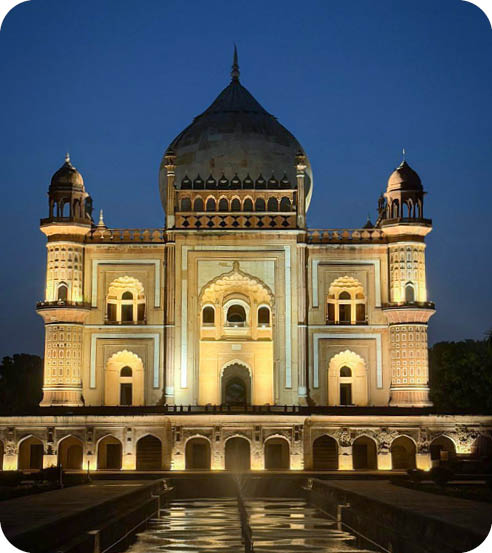
Safdarjung Tomb

At Safdarjung Tomb, landscaping initiatives were undertaken through tulip plantation and seasonal horticulture development.

Architectural lighting and illumination works were also completed to enhance the monument’s ambiance and visitor experience.

Purana Qila

At Purana Qila, boating services were introduced for visitors, supported by the construction of a dedicated toilet block near the boating facility.

Additional initiatives included architectural lighting and illumination to enhance the monument’s visual appeal, along with horticulture and landscape maintenance to improve the site’s environmental aesthetics.

Humayun’s Tomb

At Humayun’s Tomb, efforts focussed on maintaining essential visitor amenities and strengthening of security infrastructure through CCTV surveillance systems, offering a tribute to the timeless legacy of Pandit Birju Maharaj.

Promoting Cultural Pride of Bharat

As part of efforts to promote cultural identity and public engagement with heritage, monuments were transformed into vibrant cultural spaces through music, storytelling, heritage walks, dance and community-led experiences. These initiatives, organised by Sabhyata Foundation along with its partners, helped deepen public connection with India’s living heritage.

Key cultural events organised during the year included:

  • Navratra Nights at Purana Qila featuring Garba, Dandiya and festive celebrations
  • Shaam-e-Ghazal at Safdarjung Tomb curated by Bickram Ghosh, with performances by Pratibha Singh Baghel and Prithvi Gandharv
  • Live the Legacy featuring a Sarod Quintet performance by Amjad Ali Khan and family at Safdarjung Tomb
  • World Kathak Day led by Shivani Verma featuring Rajendra Gangani and visual narratives by Amit Pasricha
  • Candlelight Concerts at Safdarjung Tomb and Purana Qila in collaboration with Live Your City
  • SF Trails & Tales heritage walks curated by Rana Safvi
  • Santana Journey at Purana Qila celebrating devotional music and Phoolon ki Holi
  • Samagam Tour at Qila Rai Pithora Complex as an immersive sound healing experience
  • Jahan-e-Khusrau at Purana Qila curated by Muzaffar Ali featuring artists, including Satinder Sartaaj, Sukhwinder Singh and Hans Raj Hans

The year also witnessed special engagements such as the Take Pride gathering in collaboration with Young Indians and a heritage interaction at Purana Qila featuring Lionel Messi, reinforcing the role of heritage monuments as active cultural spaces that foster dialogue, participation and collective pride.

Future Roadmap

The future roadmap focusses on strengthening the cultural and heritage value of the country while enhancing awareness and visitor engagement at heritage and tourist sites. Key priorities include the development of sustainable tourism infrastructure, continued operations and maintenance of essential amenities, and creation of world-class visitor facilities to elevate the overall tourist experience.

Planned initiatives include the installation of Wi-Fi facilities, introduction of golf carts across monuments, organisation of eight cultural events, continued horticulture, cleaning and sanitation activities, and deployment of solar infrastructure projects to support sustainable operations.

These interventions are also expected to generate employment opportunities and support local livelihoods within the heritage and tourism ecosystem.

Growing With The Value Chain
Anchoring Sustainable Growth with Global Standards