Integrated Annual Report2025-26

Smart Manufacturing
for Strong Bharat

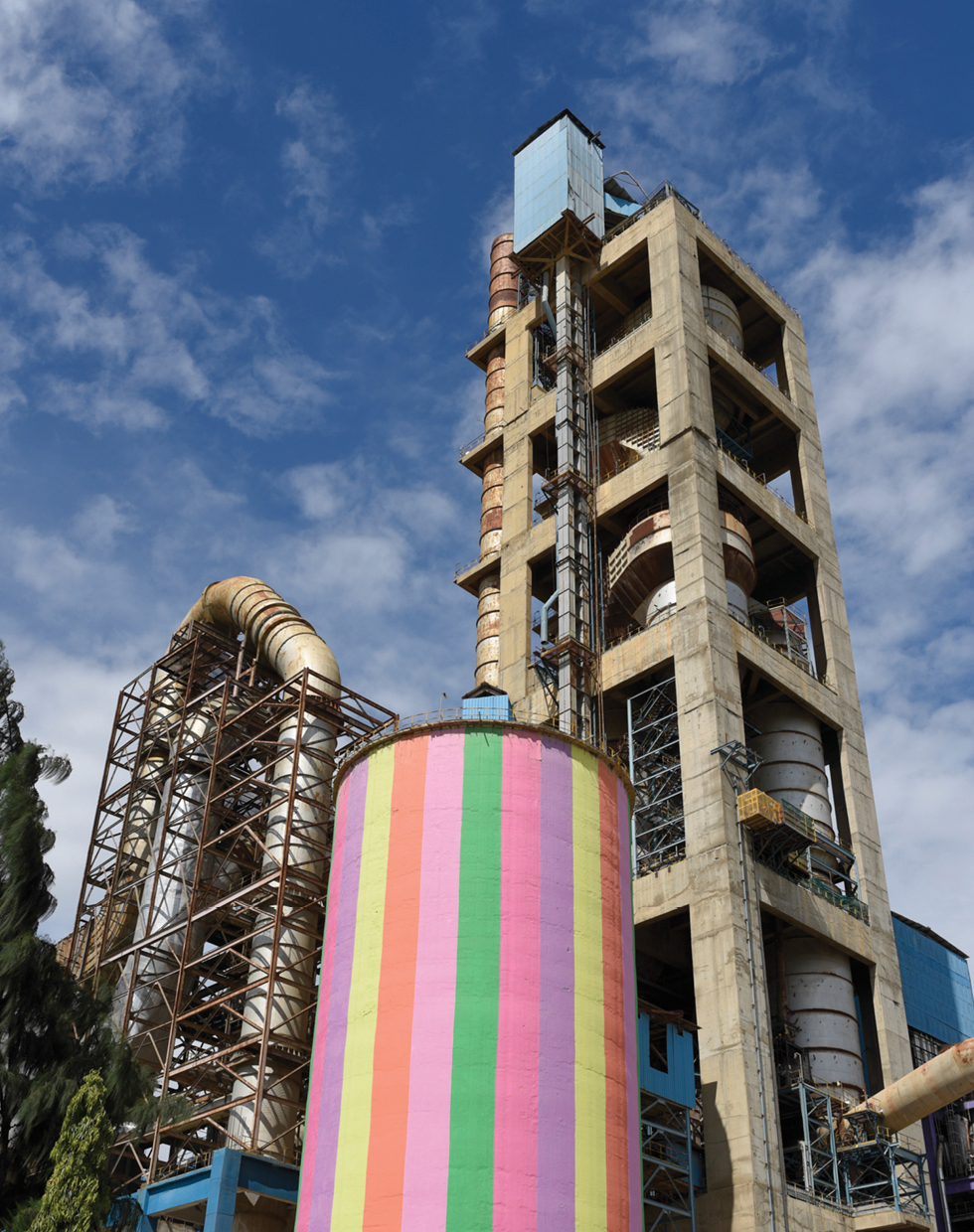
Ariyalur Plant, Tamil Nadu

Strengthening the Foundations for a Rising Bharat

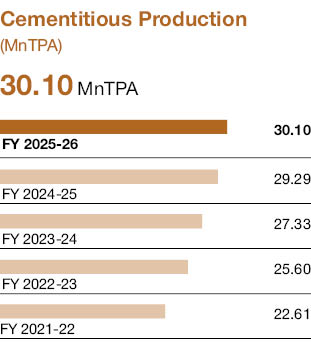
FY 2025–26 has been a year of focussed execution and steady progress. We scaled production to 30.04 MnTPA while improving plant reliability through digital systems and disciplined operations. Our push towards blended cements and a 46% renewable energy share reflects a clear shift to more sustainable manufacturing. Capacity expansion across key regions is progressing well, strengthening our ability to serve growing demand. At the same time, cost optimisation and supply chain efficiency remain priorities. With these efforts, we are building a resilient, future-ready manufacturing platform aligned with Bharat’s growth.

Bokaro, Jharkhand

Performance Snapshot

61 %
Capacity Utilisation
30.04 MT
Production Volume
30.0 MT
Sales Volume
46 %
Renewable Energy Share

Building Linkages Across

Capitals

  • Manufactured Capital

  • Natural Capital

Strategies

  • Generate Strong Returns and Maintain a Strong Balance Sheet

  • Become a Pan-India Player

  • Deliver Measurable Sustainability

Material Issues

  • Biodiversity Conservation

  • Water Stewardship

  • Waste Management

  • Circular Economy

  • GHG and Climate Change

  • Energy Management

  • Economic Performance

Risks

  • Input Material Availability & Cost Volatility Risk

  • Demand Risk Arising from Macroeconomic Factors

  • Land Acquisition and Surface Rights Risk

  • Mining Risk

  • Competition Risk

Stakeholders

  • Customers and Dealers

  • Suppliers

  • Industry Associations, Knowledge and Technology Partners

  • Government and Regulatory Bodies

SDGs

“FY 2025-26 has been a year of focussed execution and steady progress. We scaled production to 30.04 MnTPA while improving plant reliability through digital systems and disciplined operations. Our push towards blended cements and a 46% renewable energy share reflects a clear shift to more sustainable manufacturing. Capacity expansion across key regions is progressing well, strengthening our ability to serve growing demand. With these efforts, we are building a resilient, future-ready manufacturing platform aligned with Bharat’s growth.”

Mr. Ganesh W Jirkuntwar

National Manufacturing Head

Strategic Priorities

Expand & Compete

Scale capacity across India with a lean operating footprint driven by cost, logistics, and supply chain excellence.

Scale Efficiency Infrastructure

Lead Responsibly

Embed ESG, decarbonisation, and risk governance — making sustainability a competitive advantage.

Sustainability Governance

Grow Beyond Organic

Pursue acquisitions and strategic partnerships to accelerate market position and long-term value.

M&A Strategic Growth

Build for the Future

Integrate emerging technologies and build a high performance organisation to execute complex, large-scale projects.

Innovation Talent

FY 2025-26 Initiatives

Key initiatives during the year were aligned with five core strategic objectives:

Capacity Expansion

Scaling capacity from ~49.5 MTPA towards 75 MTPA in the medium term, with a long-term vision of 110–130 MTPA by 2031.

Regional Market Strengthening

Expanding presence across key regions, including the Northeast (Umrongso), South (Belgaum, Kadapa) and West (Pune).

Sustainability Leadership

Advancing renewable energy adoption, carbon reduction initiatives, and smart plant frameworks.

Cost Leadership

Enhancing efficiency through logistics optimisation, energy cost reduction, and modernisation.

Renewable Energy

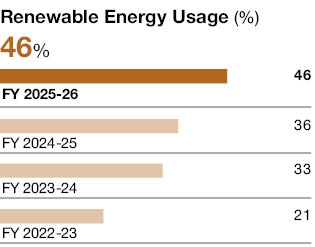
Achieved a landmark renewable energy share of 46%, driven by the addition of 182 MW of RE capacity and moving closer to the strategic goal of 50% clean energy consumption.

Packaging Plant, Tamil Nadu

Capacity Expansion

Capacity expansion is a core pillar of Dalmia Bharat’s growth strategy, driven by a structured yet flexible project prioritisation framework. Projects are broadly categorised into two categories:

Capital Expenditure for Existing Units

Evaluated on parameters such as safety, return on investment, infrastructure, sustainability, and market conditions.

New Capacity Additions through Brownfield and Greenfield Developments

Prioritised based on execution readiness, demand outlook, and alignment with strategic objectives.

The expansion journey follows a well-defined lifecycle, beginning with inclusion in strategic growth plans and progressing through feasibility assessment, conceptualisation, and budgeting. Once proposals receive Board approval, projects move into execution phases, including procurement, detailed engineering, construction, and commissioning, before transitioning into full-scale operations.

Capacity Expansion Roadmap

Clinker Capacity Expansion

Umrangshu, Assam

Commissioned a 3.6 MnTPA clinker line in January 2026, enabling clinker sufficiency for ~8 MnTPA cement capacity in the Northeast.

Belgaum, Karnataka

A 3.6 MnTPA clinker unit under construction, commissioning targeted by the end of FY 2026-27.

Kadapa, Andhra Pradesh

Board-approved 3.6 MnTPA clinker unit to strengthen the market penetration in South region.

27.1 MTPA
Clinker Capacity in FY 2025-26

Upon completion, total clinker capacity is expected to increase to ~34.3 MnTPA by Q2 FY 2027-28, significantly enhancing supply security.

Cement Capacity Expansion

To complement clinker additions, we are adding 12 MnTPA of cement capacity:

Southern and Western India
Kadapa

6 MnTPA grinding unit at the existing plant, including 3 MnTPA bulk terminal at Chennai to serve Northern Tamil Nadu

Belgaum

3 MnTPA brownfield grinding unit

Pune

3 MnTPA greenfield split grinding unit targeting Western Maharashtra

Ariyalur, Tamil Nadu

Capacity Utilisation

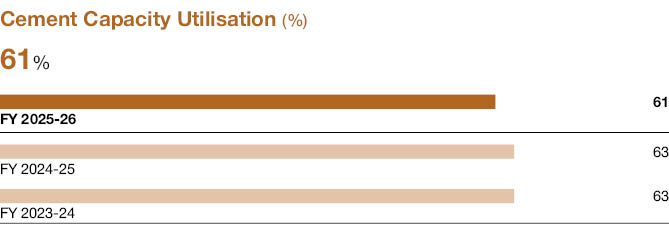
We look at capacity utilisation in the context of how demand is shaping up across regions. At an overall level, we operated at 61% cement capacity utilisation in FY 2025-26. It provides us with adequate headroom to grow volumes without being immediately dependent on new capacity.

Utilisation levels differ meaningfully across our footprint, driven by local demand-supply conditions:

  • Some micro-markets are already operating at high utilisation levels
  • Others continue to have significant available capacity
  • The Kadapa plant in Andhra Pradesh is a clear example of a high-utilisation asset, which has informed our expansion decision in the region

Because of this dispersion, we take a market-specific approach rather than optimising for a single company-wide utilisation metric. Our strategy flexes depending on the utilisation profile of each region:

  • In markets with lower utilisation, we focus on increasing volumes and improving market share
  • In markets where utilisation is already high, we prioritise pricing discipline and margin improvement
  • Alongside this, we are also working on improving effective utilisation through operational efficiencies

This includes:

  • Logistics optimisation to reduce inefficiencies
  • Higher fleet utilisation to improve throughput across the network

From an industry perspective, cement sector utilisation in India is currently around 70%. With capacity additions expected to broadly keep pace with demand growth, we expect industry utilisation to remain range-bound, with overcapacity likely to persist in the near term.

Belgaum, Karnataka

Production

Operational Excellence Framework

Operational excellence has been strengthened through the implementation of a four-pillar structure across all units, encompassing Inspection, Planning, Execution, and Continuous Improvement. Inspection processes have been enhanced through geofencing to improve accountability, while real-time abnormality identification tools enable early detection of potential issues. In addition, Root Cause Analysis (RCA) is systematically conducted using the DMAIC (Define, Measure, Analyse, Improve and Control) methodology, ensuring structured problem-solving, effective corrective actions, and sustained process improvement across operations.

Lanka, Assam

Cost Optimisation Initiatives

A comprehensive, multi-pronged approach has been implemented to optimise operating costs while ensuring consistent product quality across plants. This approach focusses on improving raw material efficiency, optimising fuel consumption, enhancing the energy mix, and driving process improvements. These initiatives have contributed to sustained year-on-year cost reduction and strengthened manufacturing competitiveness.

Sustainability and Low-Carbon Manufacturing

Sustainability is embedded across every stage of project decision-making, ensuring that system selection remains closely aligned with long-term environmental goals. This commitment is reflected not only in overarching design principles but also in the specific technical choices made across new projects. These efforts support Dalmia Bharat’s aspiration to achieve carbon negativity over the long term, while also advancing its RE100 commitment toward sourcing 100% renewable electricity.

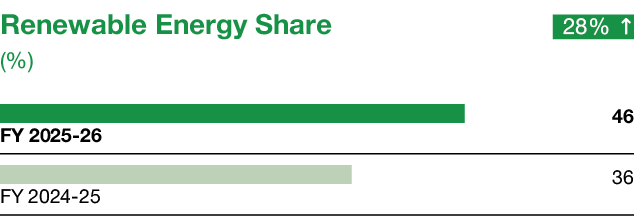
Renewable Energy Share

46 %
FY 2025-26
36 %
FY 2024-25

Shifting towards cleaner and cost-efficient energy sources

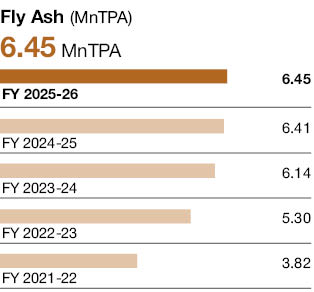
Fly Ash Utilisation

6.45 million
Tonnes per annum
6.41 million
Tonnes per annum

Reduced clinker dependency and optimised raw material usage

Key Sustainability-led Interventions

Engineering new pyro-processing systems to achieve ~50% Thermal Substitution Rate (TSR) with minimal modifications, while retaining flexibility for further enhancement through external waste utilisation.

Integrating future-ready features such as chlorine bypass systems and carbon capture units at the design stage.

Standardising the inclusion of Waste Heat Recovery Systems (WHRS) and rooftop solar installations to strengthen energy efficiency and renewable adoption.

Deploying best-in-class technologies to optimise heat and power consumption.

Decarbonisation and Renewable Energy Transition

A series of focussed initiatives has been undertaken to reduce carbon intensity across operations and accelerate the shift towards sustainable manufacturing. A key priority has been the increased adoption of renewable energy through investments in solar power, Waste Heat Recovery Systems (WHRS), and green power sourcing.

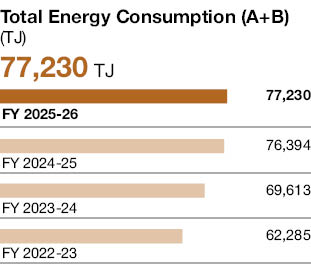
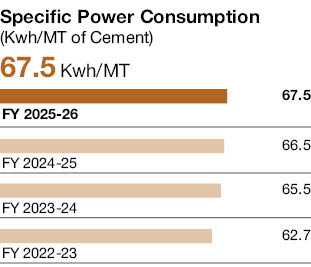
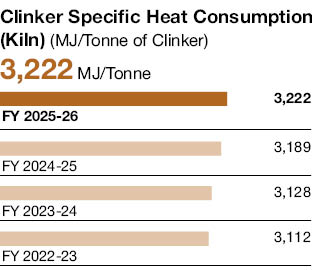
Energy Consumption

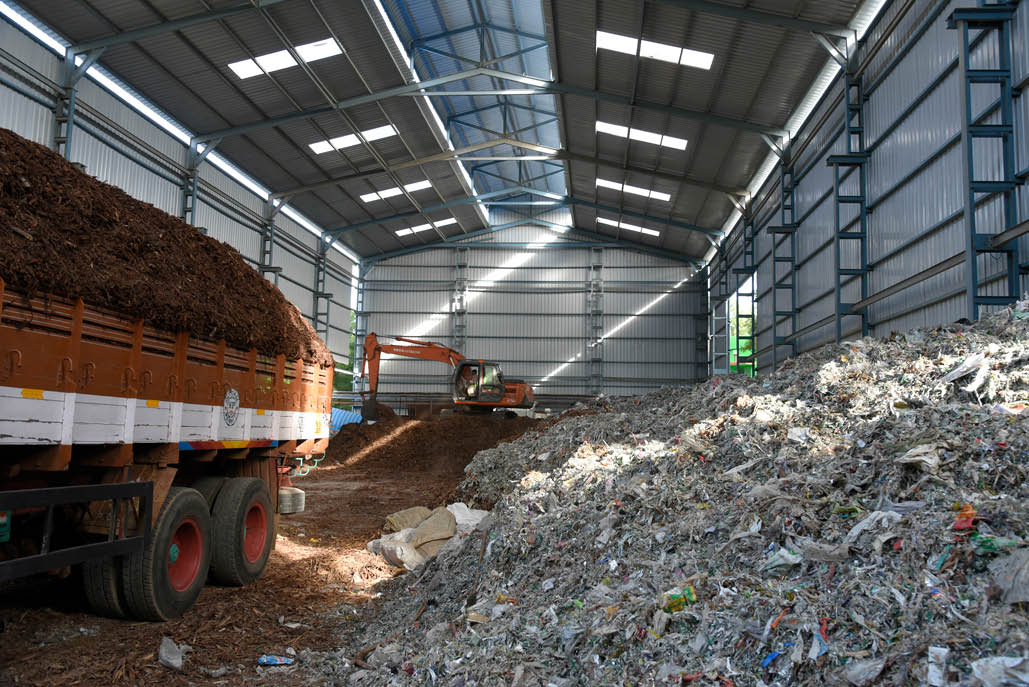
Municipal Waste Unit at Ariyalur, Tamil Nadu

Circular Economy and Resource Efficiency

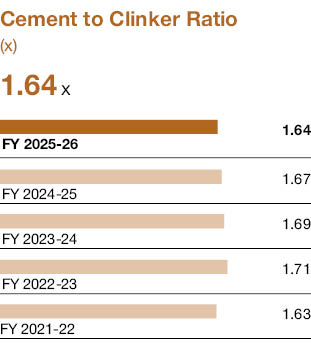
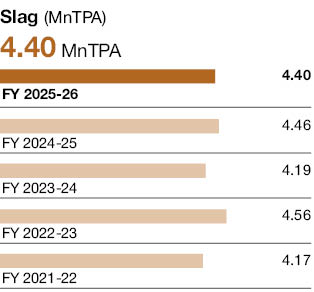
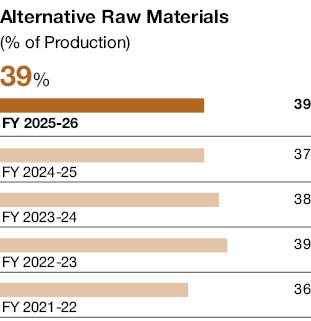
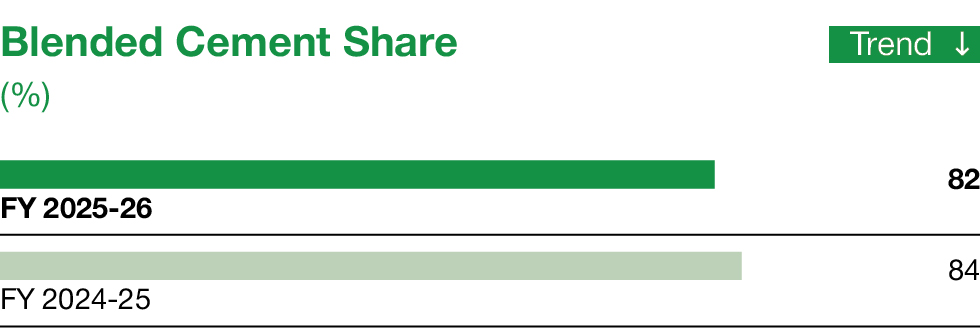
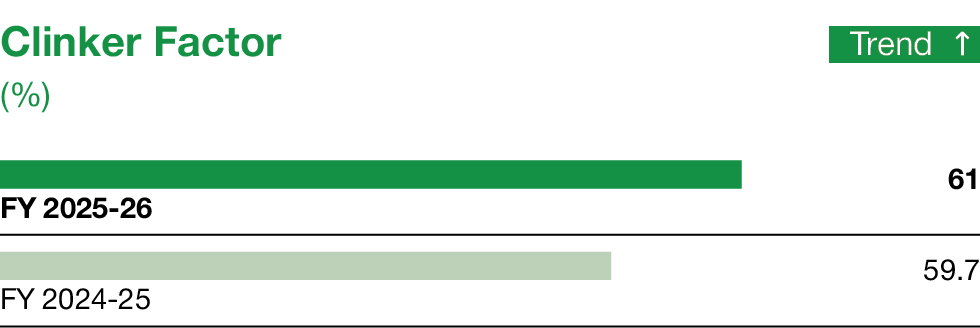
The circular economy approach has been strengthened through higher utilisation of recycled waste and industrial by-products in cement manufacturing. Materials such as fly ash and slag are being used in blended cements like Portland Pozzolana Cement (PPC) and Portland Slag Cement (PSC), reducing clinker factor and associated CO₂ emissions.

Alternative Raw Materials and Recycled Waste

Recycled wastes and alternative raw materials continue to play a key role in decarbonisation of cement operations. Waste-derived fuels such as sustainable biomass, municipal and industrial waste, and plastics are co-processed in cement kilns, partially replacing conventional fossil fuels and increasing the thermal substitution rate. Recycled- waste utilisation improved by 2% in FY 2025-26 over FY 2024-25, contributing to lower coal dependency and reduced emissions. Additionally, the use of industrial by-products as alternative raw materials support clinker reduction, energy productivity improvements and CO2 mitigation.

Digital Transformation in Manufacturing

Digital technologies are being progressively integrated across manufacturing operations at Dalmia Bharat to enhance efficiency, reliability, and safety. SmartP serves as a unified digital platform, enabling structured inspections, real-time monitoring, and improved maintenance planning across all units.

Advanced systems are in the final stages of implementation, including an Enterprise Laboratory Information Management System (ELIMS) to strengthen quality management, a Plant Historian for centralised data acquisition and analytics, and AI-based video analytics to enhance safety monitoring and operational surveillance.

Under the Smart Plant initiatives, emerging technologies such as robotic inspection systems and humanoid-assisted solutions are being deployed to automate routine inspection tasks, strengthen predictive maintenance capabilities, and drive higher levels of operational excellence across facilities.

The deployment of IIoT sensors on critical equipment have improved equipment reliability and overall plant availability. During FY 2025-26, the IIoT-based monitoring system generated alerts, which ensured early fault detection and helped avoid an estimated multiple hours of potential downtime.

Luhmshnong, Meghalaya

Innovation in Manufacturing

India is in the midst of an infrastructure transformation. The government’s infrastructure push - spanning national highways, urban metro networks, affordable housing under the PM Awas Yojana, smart cities, and a rapidly expanding renewable energy grid - is creating one of the largest sustained constructions programmes the world has seen. Cement sits at the foundation of every one of these ambitions. As demand grows, so does the expectation that the industry will deliver more: durability, lower carbon, greater consistency, and deeper innovation. At Dalmia Bharat, we see this moment not merely as a commercial opportunity but as a responsibility. The expertise of our people, the depth of our research partnerships, and the inventiveness of our organisation, is being deployed to ensure that as India builds, it builds better.

Innovating for India’s Green Growth Agenda

India has committed to achieving net zero emissions by 2070 and to reducing the emissions intensity of its economy by 45% by 2030. Our innovation agenda is structured around a clear conviction: that the cement required for the next phase of growth must be high-performing and low-carbon. We are pursuing this through parallel streams of research into next-generation binder technologies, functional product innovation, and breakthrough process decarbonisation through close collaboration with leading academic and research institutions.

LC3: A Low-Carbon Binder

Limestone Calcined Clay Cement (LC3) provides opportunity to make cement with 50% clinker. We are conducting rigorous research into LC3 in partnership with academic and research institutions with specialist expertise in cementitious materials science to addresses the practical questions before commercial deployment including systematic characterisation of clay sources and comprehensive testing of physical and chemical parameters along with blending studies. Our goal is to build evidence base robust enough to support responsible, wide-scale deployment thereby contributing directly to the decarbonisation of India’s built environment.

Geopolymer Cement: Industrial By-Products

In collaboration with academic and research partners, our geopolymer research is examining the reactivity and performance characteristics of fly ash and slag from multiple Indian sources, mapping regional variability and its implications for product consistency. In addition, we are also looking at various activator types, concentrations and combinations for their influence on setting behaviour, strength gain and long-term microstructural stability. Further durability studies are also being carried out for chemically aggressive environments, including sulphate-rich soils and marine exposure conditions prevalent across India’s coastline and agricultural regions.

Water-Repellent Cement for India’s Climate Realities

India’s construction environment is among the most demanding in the world. From the high humidity and heavy monsoon rainfall of the coastal states to the flood-prone river plains and the salt-laden air of maritime zones, structures face moisture-related stresses that shorten lifespans and inflate maintenance costs. We are developing water-repellent cement formulations that embed hydrophobic protection within the cement matrix itself, making moisture resistance an intrinsic property of the product rather than an add-on. The development programme is advancing through laboratory formulation, mortar and concrete performance trials, and structured durability assessment.

Made-in-India Carbon Capture and Utilisation (CCU)

Dalmia Bharat is proud to be at the frontier of CCU effort. Selected alongside the Indian Institute of Technology Bombay as a recipient of funding under the Department of Science and Technology’s (DST) Carbon Capture and Utilisation programme, we are in the process of commissioning an industrial-scale test bed at Rajgangpur plant post disbursal of funds to IIT Mumbai from DST, Govt. of India and Dalmia. Over the project cycle, we will optimise the system for conversion efficiency, energy consumption per tonne of CO₂ captured, and the commercial applicability of mineralised outputs. Beyond its direct environmental impact, this pilot is being designed as a proof of concept for carbon capture in Indian cement manufacturing that, if successfully validated, can be deployed across the industry and contribute meaningfully to India’s national emissions reduction goals.

Carbon Credit Markets

We are actively pursuing the domestic carbon market being implemented by Bureau of Energy Efficiency (BEE), Govt. of India and global carbon markets under Paris Agreement (Article 6.2 and 6.4). It further opens up the possibilities to advance on above-mentioned topics and projects where economic, technological, know-how or market barriers exist in developing scale.

Way Forward

The complexity of the challenges we are tackling, from deep materials science to industrial-scale carbon capture, exceeds what any single organisation can address alone. Our innovation model is deliberately open, bringing together the complementary strengths of industry, academia, government research bodies and technology start-ups. These multi-stakeholder partnerships allow us to operate at the frontier of knowledge while sharing the risk and cost of exploration. They also connect us to the global research community, ensuring that insights developed anywhere in the world can find application in the Indian context.

Sustainable Mining and Resource Management

At Dalmia Bharat, mining operations are transitioning towards a more scientific and technology-driven model, where efficiency, resource optimisation, and environmental stewardship are integrated at the point of extraction.

Technology and Operational Efficiency

IoT-enabled Monitoring

Real-time tracking of fleet performance across mining operations.

Optimised Dispatch

Deployment of Operator Independent Truck Dispatch System (OITDS) for efficient routing of dump trucks.

Fleet Electrification

Deployment of test-case EV trucks, with ongoing trials to assess operational feasibility across varying mine depths and gradients.

Resource Efficiency and Circularity

Overburden Utilisation

Ongoing pilots to convert overburden waste into industrial aggregates through specialised cutting and blasting techniques.

Material Optimisation

Blending low- and marginal-grade limestone with cement-grade limestone through scientific mining practices to enhance resource efficiency and extend mine life.

Waste Minimisation

Integration of circular economy principles into extraction and material handling.

Biodiversity and Water Stewardship

Scientific Assessments

Collaboration with CII to conduct biodiversity impact assessments and develop Biodiversity Action Plans (BAPs) for three high-sensitivity sites.

Water Resilience

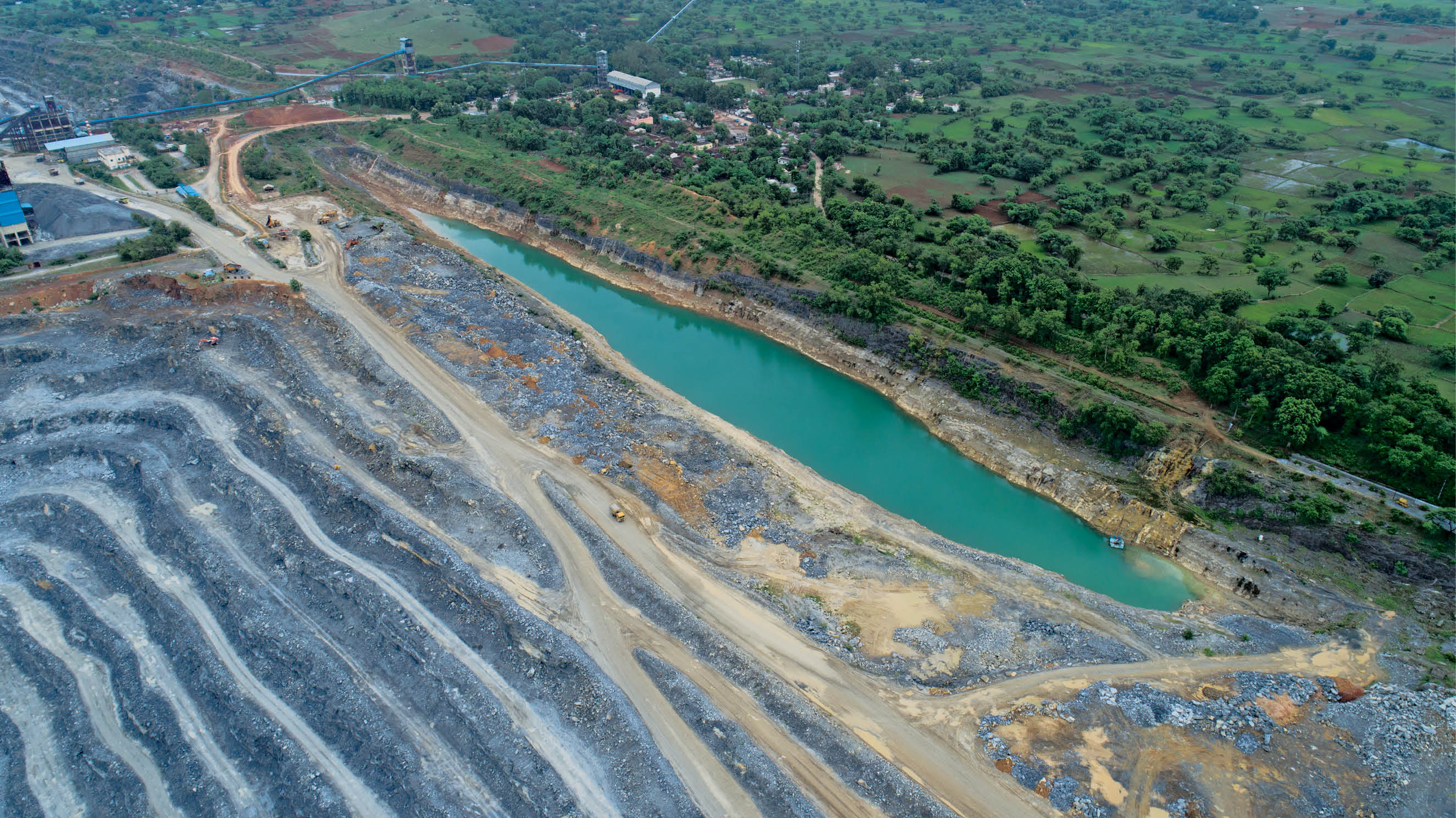
Use of in-pit water reservoirs, eliminating dependence on external water sources.

Water Recycling

Deployment of Effluent Treatment Plants (ETPs), enabling up to ~80% water reuse within mining operations.

Recognition and Governance

National Environment Award

Recognition for environmental protection at Dalmiapuram-Kallakudi Mines for FY 2024-25.

Environmental Monitoring Excellence

Yadwad & Kunnal Limestone Mine were awarded first prize during the 13th Mines Environment and Mineral Conservation Week.

Regional Recognition

Multiple awards received by Chandrapur Cement Works mines during the 36th Mines Environment and Mineral Conservation Week 2025.

Rehabilitated Quarry and Mines at Rajgangpur, Odisha

Digital Intelligence and Agility (Enabled)

At Dalmia Bharat, digitalisation is a catalyst for smarter, more responsive ways of working. We are reimagining operations through intelligent automation, scalable digital capabilities, and a digital-first mindset that brings speed, precision and adaptability to the forefront. In doing so, we are not only enhancing performance and resilience but are also making our business more agile, in step with a fast-transforming nation.

Building Linkages across

Capital

  • Intellectual Capital

Strategies

  • High Standards of Corporate Governance

  • Build Strong and High Performance Organisation

Material Issues

  • Research and Development/Innovation

  • Product Stewardship

  • Disclosure, Corporate Governance and Transparency

  • Customer Privacy and Data Protection Customer Satisfaction

Risks

  • Digital and Cybersecurity Risk

  • Regulatory and Legal Risk

  • Competition Risk

Stakeholders

  • Employees

  • Suppliers

  • Customers

  • Government and Regulatory Bodies

  • Industry Associations, Knowledge and Technology Partners

SDGs

“During the year, we accelerated our digital transformation journey with a strong focus on building a more agile, efficient, and connected organisation. We scaled automation across sales, logistics, marketing, finance and manufacturing, enabling faster execution, deeper insights, and more informed decision-making. Our AI journey progressed from pilot initiatives to structured deployment, enhancing productivity and empowering frontline teams. We also strengthened our cybersecurity framework and advanced data protection capabilities, reinforcing a resilient and future-ready digital ecosystem designed to support sustainable growth at scale.”

Mr. Manu Sood

Chief Digital & Information Officer

Strategic Priorities

Built on robust, industry-leading platforms, our IT backbone enables integrated, reliable, and future-ready operations. During FY 2025-26, the digital agenda advanced across five key areas:

Automating sales processes to improve frontline productivity

Digitising logistics to enhance efficiency and cost optimisation

Advancing smart manufacturing to strengthen safety, reliability, and operational performance

Embedding AI across functions to drive productivity

Strengthening cybersecurity and data protection frameworks

Automating Sales

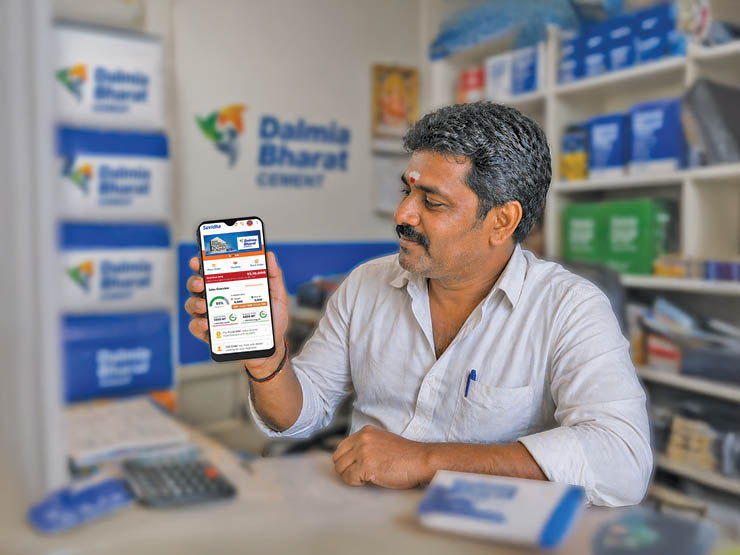
We continued to strengthen our sales digitisation journey with a focus on simplifying frontline execution, improving channel engagement, and enhancing responsiveness. Investments were made in dealer-facing and frontline tools, including our dealer app, digital nudges, and automated scheme communication systems. These initiatives are designed to create a seamless, transparent, and efficient selling ecosystem.

Our dealer app is now the highest-rated app on the App Store, reflecting strong adoption and impact.

We also enabled conversational interfaces that allow our frontline teams to access information quickly, reduce manual dependencies, and make faster decisions. In parallel, we piloted AI-driven tools in sales, which are already contributing to improved productivity.

Enabling Digital Logistics

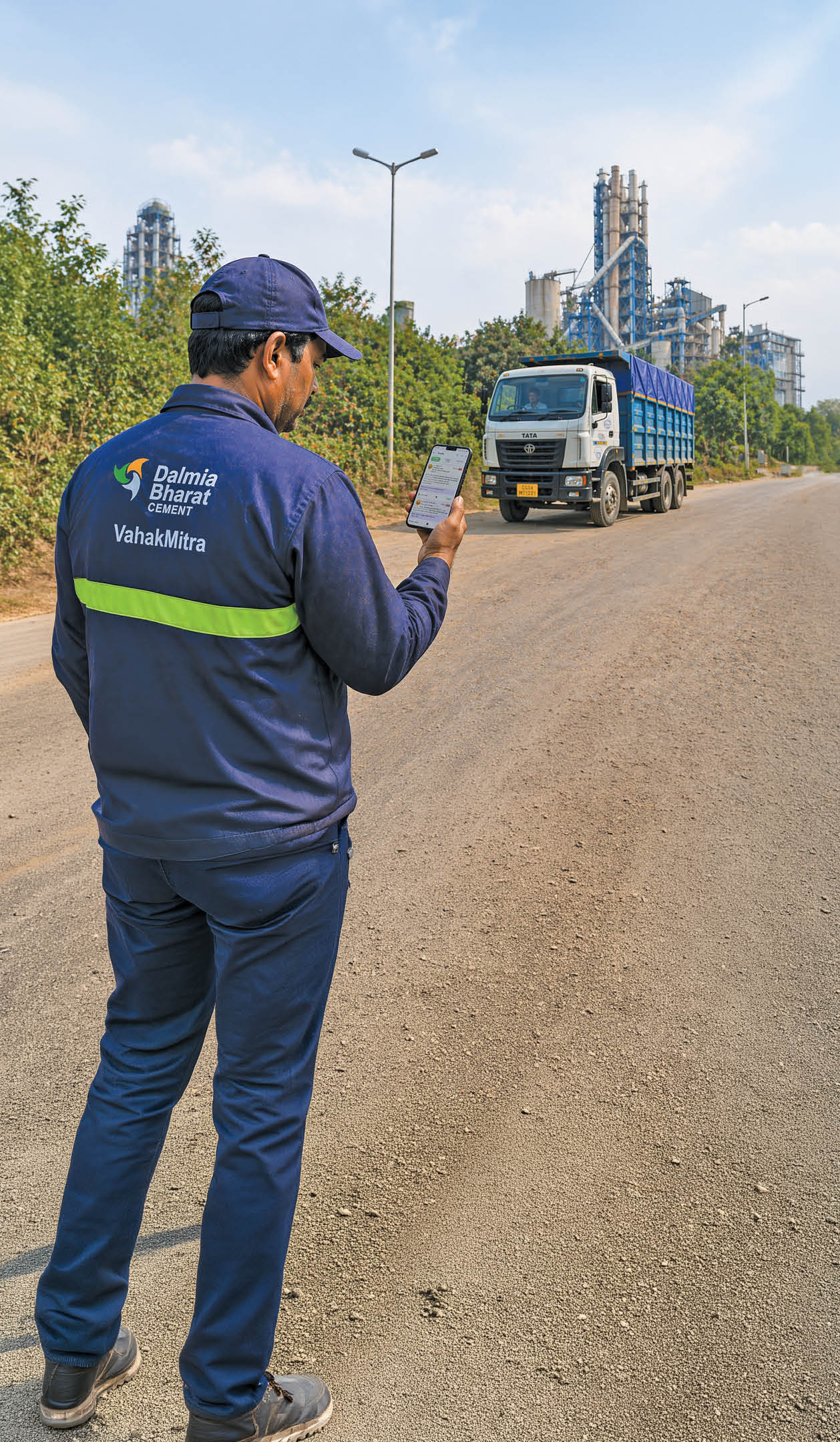
We leveraged digital technologies to transform our logistics operations, unlocking cost efficiencies and improving service delivery. Multiple logistics workflows and touchpoints are now automated, resulting in more streamlined and efficient operations.

Our logistics transformation is built around three key themes:

Cheaper Trucks

Using intelligent order management, freight determination, and fulfilment planning to optimise costs.

Faster Trucks

Leveraging technology to reduce the time between order placement and delivery, improving responsiveness.

Bigger Trucks

Enhancing vehicle utilisation and load economics through improved planning and control systems.

Umrongso, Assam
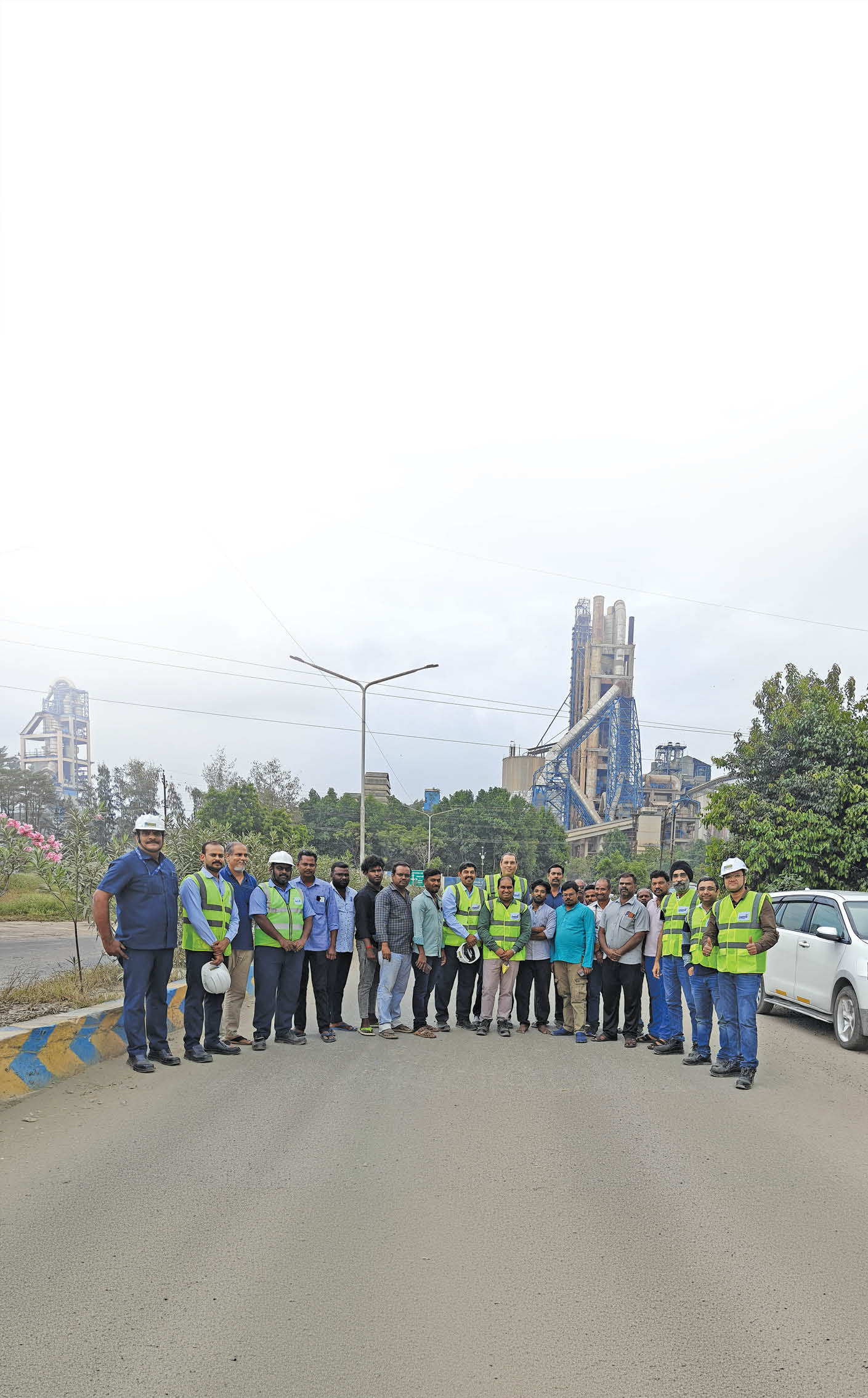
Digitialisation Team at Umrongso, Assam

Smart Manufacturing

We advanced our smart manufacturing agenda through targeted digital interventions focussed on safety, reliability, and productivity.

Kavach App

We strengthened this safety-focused application, reinforcing safe operating practices across our plants

SmartP App

We digitised maintenance workflows to ensure adherence to SOPs, improve timeliness, and reduce waste, leading to cost efficiencies and stronger controls

These initiatives have enabled better decision-making and greater operational discipline across our manufacturing units.

Embedding AI across the Organisation

During FY 2025-26, we transitioned from experimentation to structured deployment of Artificial Intelligence across our organisation. We established a systematic approach to automation, with multiple use cases powered by RPA and Generative AI.

We launched AI-powered assistants under the Dalmia Intelligent Assistant (DIA) ecosystem:

DIA – AI Sales Coach

Enabling frontline teams with real-time access to critical information, improving productivity and reducing manual effort.

DIA – AI Policies

Our HR policies are available through a conversational bot, making the information available to employees quickly.

We continue to build a strong pipeline of AI and Agentic AI use cases to further enhance productivity and decision-making.

Cybersecurity and Data Protection

We remain focussed on securing our digital infrastructure and protecting customer data through advanced cybersecurity measures.

During the year, we:

  • Deployed an industry-leading Endpoint Detection and Response (EDR) solution
  • Transitioned to an AI-enabled 24x7 Security Operations Centre (SOC)
  • Initiated the compliance journey with India’s Digital Personal Data Protection Act (DPDPA)

These initiatives ensure robust defence mechanisms, regulatory compliance, and uninterrupted business continuity.

Building a Greener Bharat

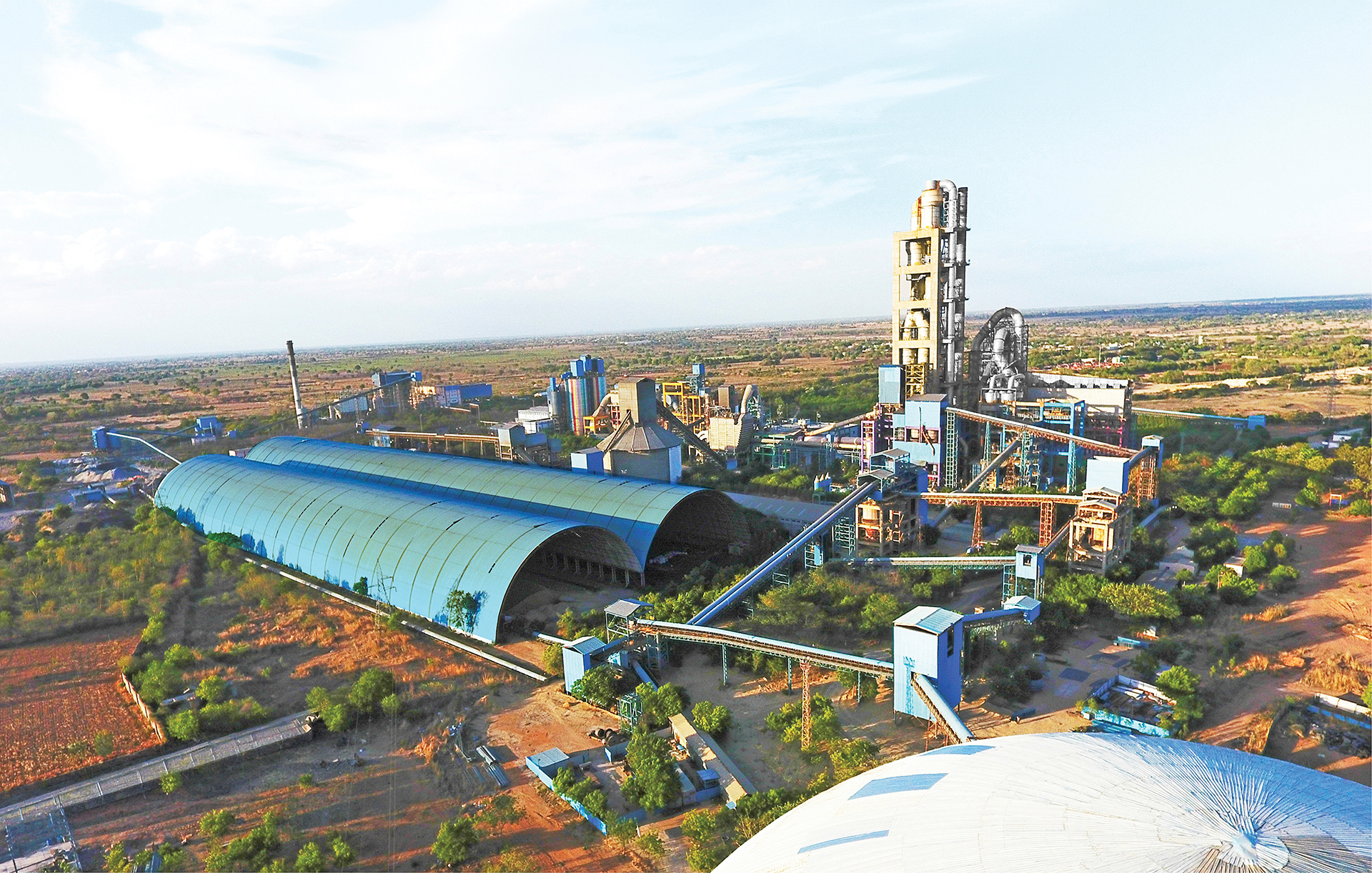
As India builds the infrastructure of the future to become a developed nation by 2047, we remain committed to ensuring that this growth is not only rapid but also responsible, with economic progress and environmental stewardship intrinsically linked. With the ambition to become Carbon Negative by 2040, we have embedded decarbonisation, resource efficiency and ecosystem stewardship into our operations, aligned with India’s evolving policy landscape, such as the Carbon Credit Trading Scheme (CCTS) and the National CCUS Mission.

Kadapa, Andhra Pradesh
Performance Snapshot

Climate and Energy

46% Scope 1 and 2

SBTi-approved Target Achieved

466 kg

CO₂/tonne Cementitious

46%

Renewable Energy Share

Resources and Circularity

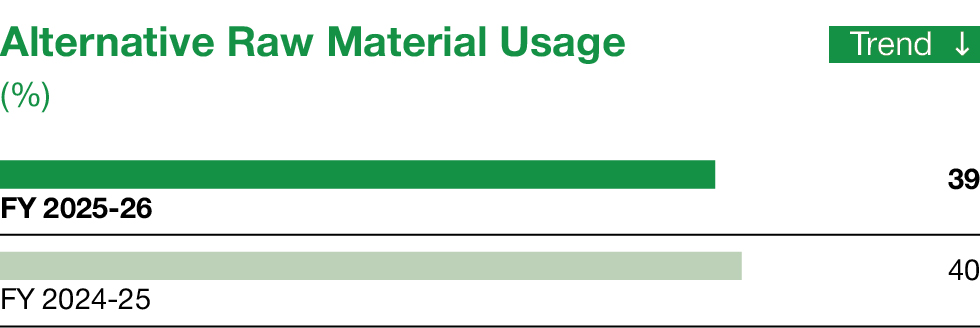
39%

Alternative Raw Material Usage

13x

Plastic Waste Recycling Positive

Water and Biodiversity

20.5x

Water Positivity Maintained - with Respect to Cement Business

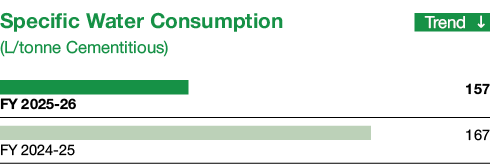
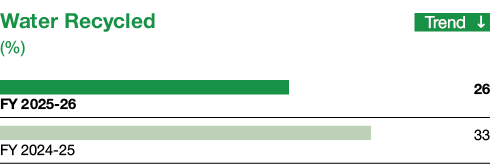
26%

Water Reused or Recycled

“At Dalmia Bharat, our focus has evolved from voluntarily setting performance benchmarks to actively decarbonising the Indian growth story. By aligning with national priorities, accelerating our energy transition, and committing to participating in breakthrough solutions such as carbon capture test-beds, we are embedding sustainability into the core of our operations, ensuring that Bharat’s infrastructure growth is supported with a building material that has a significantly lower environmental footprint.”

Mr. Lovish Ahuja

Chief Sustainability Officer

Building Linkages Across

Capital

  • Natural capital

Strategies

  • Deliver measurable sustainability impact

Material Issues

  • GHG and climate change

  • Circular economy

  • Product stewardship

  • Energy management

  • Water stewardship

  • Waste management

  • Biodiversity conservation

  • Disclosures, corporate governance and transparency

Risks

  • Input material availability & cost volatility risk

  • Climate risk

Stakeholders

  • Suppliers

  • Communities

  • Government and regulatory bodies

  • Industry associations, knowledge and technology partners

SDGs

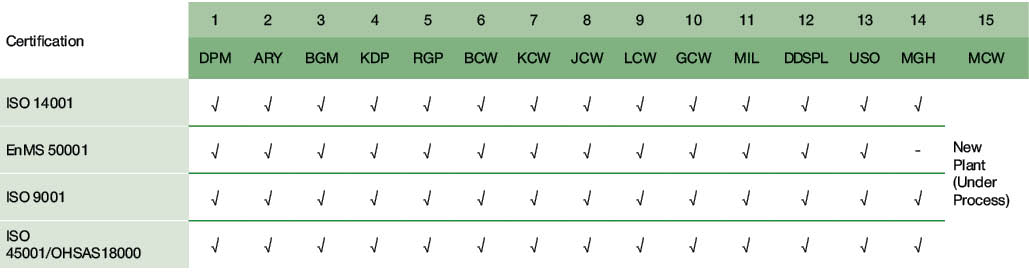
Management System Programme

We operate through a structured management programme supported by system certification standards across Quality, Energy, Environment, and Safety. This framework ensures compliance with applicable regulations and integrates environmental considerations into business decision-making. With strong leadership oversight and clearly defined cross-functional roles, the programme is reinforced by our ESG Policy and Supplier Code of Conduct. Our Environmental Management System (EMS), aligned with ISO 14001 and the PDCA cycle, drives implementation across all sites. It further enables regular trainings, performance target setting, monitoring, and continual improvement, with facility heads responsible for effective execution.

Management Systems Implemented at Plants

System in Practice

  • Plant-level ownership with defined accountability
  • SOP-led execution aligned with operational requirements
  • Continuous improvement through measurable targets
  • Third-party certification for a robust system
  • Regular third-party audits

Monitoring and Performance

We track environmental investments, costs, savings, and efficiencies across 100% of operations, enabling visibility of both environmental and financial impact at plant and Group levels.

Climate Governance and Transparency

Effective climate governance is central to the execution of our strategy, ensuring that climate-related risks and opportunities are identified, managed, and embedded into decision-making at every level of the organisation. At Dalmia Bharat, governance follows a structured, multi-tiered approach, linking Board oversight with management execution and plant-level implementation.

In FY 2025-26, this framework was further strengthened by elevating sustainability to the Board level.

Governance Framework in Action

  • Board Oversight The Risk Management Committee was reconstituted as the Sustainability and Risk Management Committee (SRMC), with a mandate to review climate-related target setting, performance and strategic interventions biannually. The Board through SRMC ensures that climate-related risks and opportunities are integrated into the company’s strategic planning and key business decisions. The SRMC evaluates the impact of climate issues on investments, major transactions and future growth plans, while also considering the underlying trade-offs between financial, operational and climate-related outcomes. This enables the Board to address emerging climate risks and identify transition opportunities.
  • Management Accountability Climate risks and opportunities are integrated into enterprise risk management and overseen by senior leadership, including Chief Sustainability Officer, Chief Risk Officer, the Executive Committee and the CEO. Management uses various controls and procedures to oversee climate-related risks and opportunities. These include monitoring plant-level energy performance, reviewing climate considerations during capex approvals, and setting escalation thresholds for significant risks, including climate-related risks. Such controls are integrated into key functions, including operations, procurement, and administration, to support timely risk identification and mitigation. The risk registers and control matrices are periodically reviewed to strengthen existing processes and identify areas for improvement. This approach supports informed decision-making and helps improve resilience to climate-related impacts.
  • Operational Execution Plant-level executive management (Unit Heads & Departmental Heads) with designated SPOCs are responsible for implementing climate initiatives and ensuring on-ground performance. Plant-specific risk assessments are carried out periodically to identify climate-related exposures and implement suitable mitigation measures. The progress of these measures is monitored on an ongoing basis. Climate-related information is reported by designated SPOCs through established reporting channels to the central management team for review, consolidation, and timely escalation of key risks and performance updates.

Enhancing Transparency and Disclosures

We have adopted the TCFD (Task Force on Climate-related Financial Disclosures) framework to systematically assess and disclose climate-related risks and opportunities. Going forward, we are already progressing beyond the TCFD framework to the International Financial Reporting Standards (IFRS) S2 Climate-related Disclosures framework and have engaged a reputed consultant to carry out the assessment. IFRS S2 builds on the TCFD framework by introducing standardisation and comparability in climate-related disclosures. It places strong emphasis on the financial effects of climate risks and opportunities and encourages clear linkage between climate strategy, business performance and enterprise value. This would enable us to integrate climate considerations into strategy, governance, risk management, and financial planning, while providing stakeholders with clear and consistent disclosures.

In line with evolving global expectations, we are also working on Global Cement and Concrete Association (GCCA) - TNFD-aligned disclosures for the cement sector to further strengthen transparency on nature-related risks and dependencies.

Net Zero Transition and Progress Towards Long-Term Targets

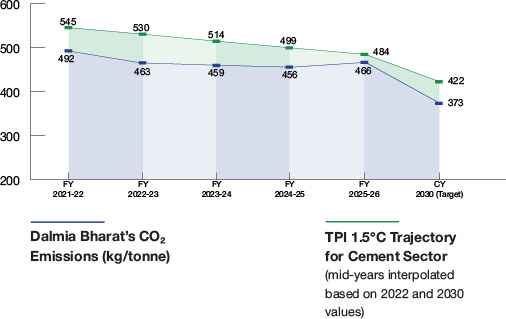
Our emissions trajectory reflects a clear pathway towards the Net Zero and Carbon-Negative ambition of Dalmia Cement. As per the TPI and Grantham Institute methodology, the Net Zero (1.5°C) pathway requires Net CO₂ emissions of 545 kg CO₂ by 2022 and 422 kg CO₂ by 2030 per tonne of cementitious product. Our net CO₂ emissions trajectory is lower than the 1.5°C trajectory of TPI.

Dalmia Bharat’s CO Emissions (kg/tonne)

TPI 1.5°C Trajectory for Cement Sector

(mid-years interpolated based on 2022 and 2030 values)

Rehabilitated Mines, Dalmiapuram, Tamil Nadu

Driving GHG Intensity Reduction through Structural Levers

At Dalmia Bharat, our realised Net Zero Trajectory to managing greenhouse gas (GHG) emissions is guided by our ambition to become carbon negative by 2040 (subject to the external conducive levers progressing simultaneously). We remain focussed on reducing emissions intensity while scaling operations, ensuring that growth is aligned with a lower embodied carbon footprint.

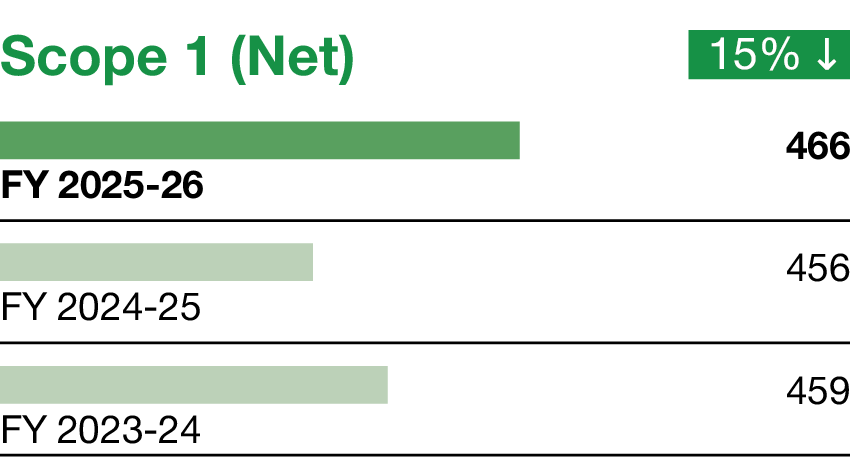
Building on our performance of 456 kg CO₂/tonne in FY 2024-25, our emissions trajectory in FY 2025-26 reflects the dynamic nature of expansion and demand. Despite this, our long-term pathway remains firmly aligned with our ‘Grey to Green’ roadmap, which targets a significant reduction from our historical baseline of 546 kg CO₂/tonne (FY 2018-19).

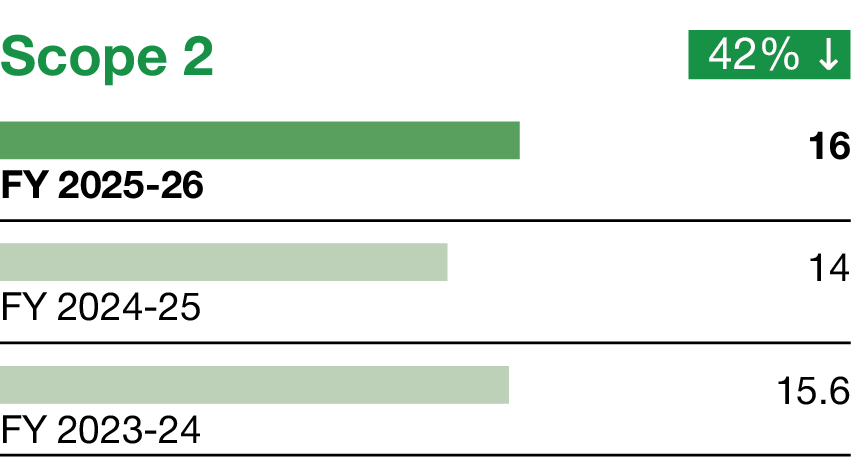
15.75 (Scope 1) Gross (Cement) million tCO2/year
Total direct CO2e emissions
14 (Scope 1) Net million tCO2/year
Total direct CO2 emissions
523 (Scope 1) Gross kg/t of cementitious material
Specific CO2 emissions
466 Net kg/t of cementitious material
Specific CO2 emissions

Mitigation Levers and Progress

Our decarbonisation strategy is driven by a set of structural levers that continue to deliver sustained improvements:

GHG Mitigation Impact by Key Decarbonisation Levers Vs FY 2017-18 Baseline

Measures tCO2 avoided/saved
Avoided Emissions from Low Carbon Blended Cement Production 7,65,244
Use of Renewable/Fossil-Free Electricity 6,25,393
Recycled Waste and Sustainable Biomass use as Fuel 9,58,068
Total for FY 2025-26 23,48,705

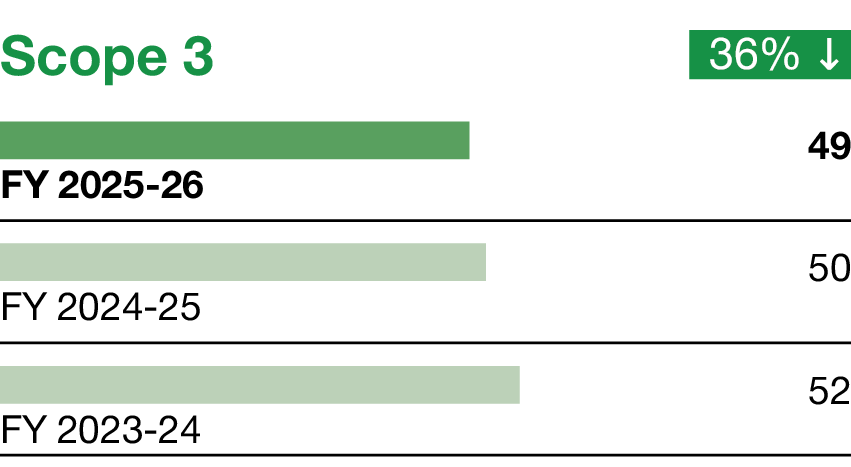
Scope 3 emissions breakdown by relevant categories (FY 26)

(As per WBCSD guidance for cement sector)

Category Calculation FY25 (tons CO2)
Purchased Goods and Services 1,76,647
Capital Goods 13,302
Fuel-and-energy-related Activities (Not Included in Scope 1 or 2) 9,87,512
Business Travel 3,050
Employee Commuting 7,202
Downstream Transportation and Distribution 1,30,976
Total Scope 3 emissions 14,76,226

Reduction % compared to FY 19 baseline

Moderation of Air Emissions

We maintain a strong focus on moderating air emissions through technology, monitoring, and operational improvements. Our design-stage interventions and targets on air emissions are delivering emission values that are 20 to 30% lower than regulatory norms.

  • Real-Time Monitoring: Near-total coverage under Continuous Emission Monitoring Systems (CEMS).
  • Process Optimisation: Measures aimed at minimising environmental impact, including optimisation of burning zone temperatures, deployment of low-NOx calciners and burners, and use of electrostatic precipitators and baghouses for effective particulate control.
  • Fugitive Dust Management: Preventive controls such as covered conveyor belts and storage areas, along with mechanised sweeping systems, to reduce fugitive dust emissions across plant operations.
For details related to Air Emission Data, refer BRSR Report

Accelerating the Shift to Clean and Efficient Operations

At Dalmia Bharat, energy transition remains a key lever in advancing our decarbonisation journey. In FY 2025-26, we continued to accelerate our shift towards renewable energy while strengthening operational efficiency across processes and logistics.

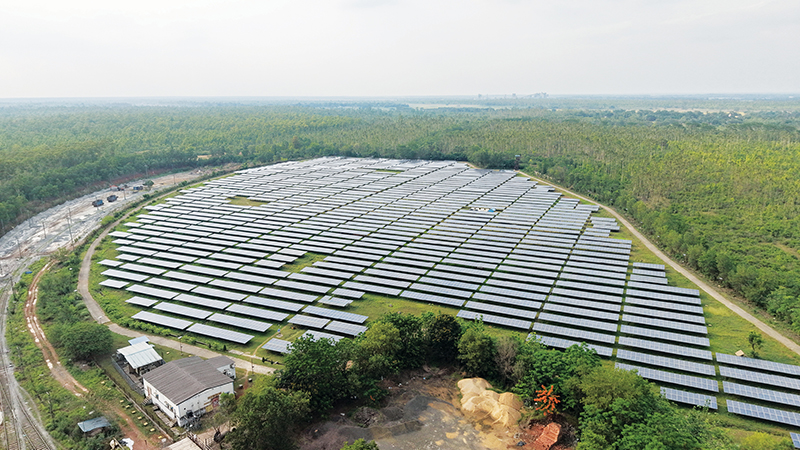
Solar Plant, Cuttack, Odisha

Recycled Energy Transition

We continue to accelerate our transition towards renewable energy as a core lever of decarbonisation, supported by capacity expansion and strategic sourcing.

Renewable Energy Share

Increased to 46%, reflecting steady progress in FY 2025-26

Operational Non-Fossil Power Generation Capacity

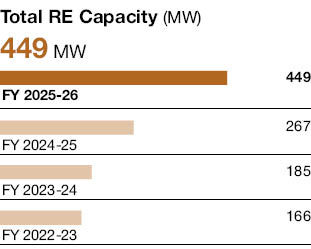
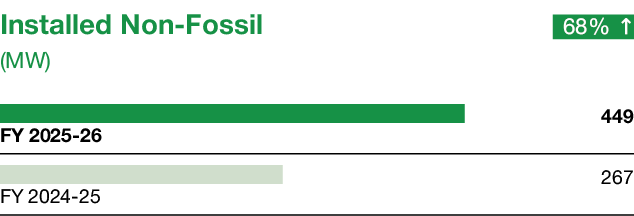
Expanded to 449 MW

Investment Approach

Strengthened through participation in group captive renewable models

Future Focus

Evaluating RE storage solutions to support round-the-clock operations

Energy Transition

Energy Management

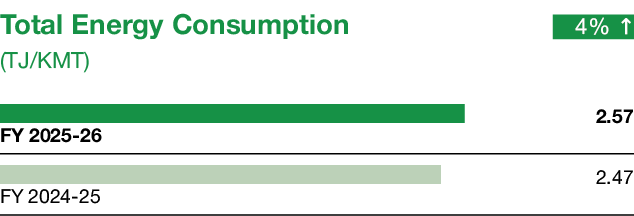
Our focus remains on optimising energy consumption through recovery systems and process-level monitoring.

Process Monitoring

Improved visibility of energy consumption across operations

System Integration

Strengthened tracking of energy performance for better control

A key challenge remains the bankability of renewable energy across states, driven by policy variability. To address intermittency and enable round-the-clock operations, we are actively evaluating Battery Energy Storage Systems (BESS), with a requirement for 8–10 hours of storage, despite current cost constraints.
Operational Efficiency

We continue to improve operational performance by integrating sustainability into core production processes.

Material Efficiency

Optimised clinker usage through higher blended cement share

Cost Optimisation

Leveraging the energy mix and material efficiency to improve margins

Process Improvements

Continuous focus on productivity and resource utilisation

WHRS Capacity

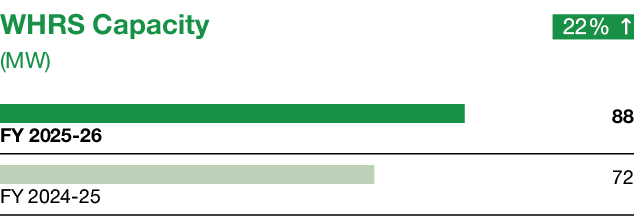
Increased to 88 MW, enhancing utilisation of waste heat

Fleet Transition

Deployment of electric vehicles with planned scale-up

Fuel Shift

Introduction of lower-emission fuel alternatives

Green Logistics

We are advancing efforts to lower emissions across logistics through cleaner fuels and improved transport efficiency.

Operational Improvements

Enhanced logistics planning and route efficiency

Modal Shift

Increased use of rail transport where feasible

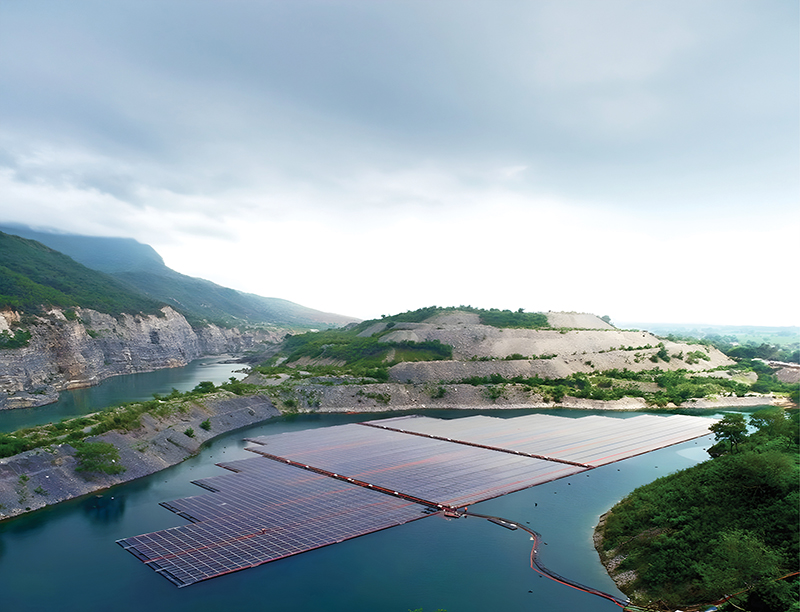
Floating Solar Plant, Kalyanpur, Bihar

Turning Waste into a Strategic Resource

At Dalmia Bharat, our approach to waste management is anchored in circular economy principles, where waste is treated as a resource that drives both decarbonisation and resource efficiency. We continue to strengthen this approach by integrating industrial by-products into our production processes, reducing dependence on virgin materials and lowering overall environmental impact.

Recycled Materials and Circularity

  • Material Sourcing

    Long-term tie-ups for slag, fly ash, and other industrial by-products

  • Blended Cement Focus

    Higher use of supplementary materials to reduce clinker intensity

  • Co-Processing

    Increased use of industrial waste as recycled input

Operational Initiatives

  • Mine Waste Utilisation

    Exploring conversion of overburden into usable materials

  • Land Restoration

    Integrating waste management with mine reclamation strategies

  • Process Optimisation

    Continuous improvement in waste utilisation across operations

In FY 2025–26, training sessions, with 77,174 training hours on energy efficiency, emissions, waste management, water efficiency, CCTS, were conducted, to promote energy efficiency across its operation.

13X
Plastic Waste Positive

Circular Resource Efficiency

Circularity in Practice: Industrial Waste Utilisation

Our approach to natural capital extends to reducing dependence on virgin resources through circularity. By increasing the use of industrial by-products such as fly ash and slag, we have strengthened industrial symbiosis while reducing pressure on natural raw materials. This has enabled us to maintain a high level of alternative raw material utilisation (~39%), contributing to lower clinker factor, reduced emissions, and improved resource efficiency. This approach not only minimises waste across industries but also supports a more resource-efficient production ecosystem.

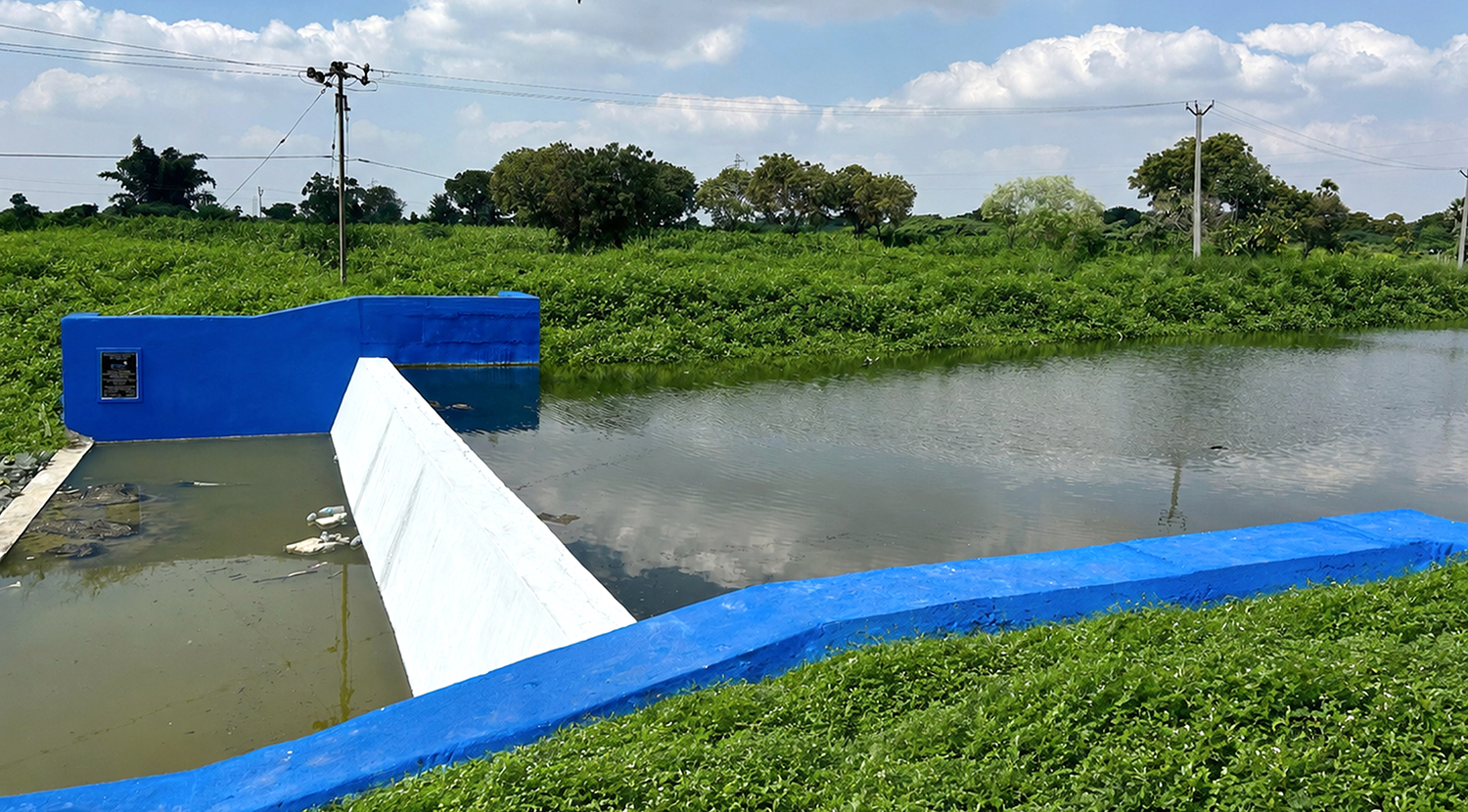
Check Dam at Dalmiapuram, Tamil Nadu

Water Stewardship and Resilience

At Dalmia Bharat, water stewardship is integral to our sustainability approach, with a focus on reducing operational dependency while enhancing water availability for surrounding ecosystems and communities.

Sustained Leadership with

20.5 x
Water Positivity with Respect to Cement Operations

Strategic Approach

  • Efficiency Focus

    Continued reduction in specific water consumption vs. baseline

  • Decoupling Growth

    Managing water use independently of production scale

System Strengthening and Calibration

  • Infrastructure Review

    Ongoing assessment of water assets contributing to positivity

  • Data Reliability

    Calibration of performance metrics to ensure accuracy

  • Resource Management

    Focus on both water quality and availability

Water Performance

From Restoration to Science-led Ecosystem Management

In FY 2025-26, Dalmia Bharat strengthened its approach to biodiversity by transitioning from restoration-led practices to a more structured, science-based framework for managing natural capital. Building on the baseline of land rehabilitation and ecosystem development, our focus has shifted towards measurable ecological outcomes and long-term conservation planning, aligned with our aspirational target to achieve No Net Loss (NNL) of biodiversity by 2040.

A key milestone during the year was the initiation of a comprehensive biodiversity impact assessment in partnership with CII. This exercise aims to develop formalised Biodiversity Action Plans (BAPs) for high-sensitivity sites, enabling a more data- and site-specific approach to conservation.

Key Developments

  • Initiated biodiversity impact assessments to establish ecological baselines and identify priority intervention areas
  • Revisited Biodiversity Action Plans (BAPs) for three sites
  • Enhanced focus on creating biodiversity corridors to enhance ecosystem connectivity and support `No Net Loss’ outcomes
  • Increased emphasis on native species plantation and habitat improvement

In addition, we strengthened the integration of biodiversity with community engagement. Local communities are being actively involved in plantation and conservation activities, creating opportunities for sustainable livelihoods while improving ecosystem health. By adhering to the mitigating actions (Avoid, Reduce, Restore, Regenerate and Transform) framework, we take deliberate steps to prevent disruption, reduced ecological footprints, rehabilitate affected landscapes, and, where necessary, implement offset measures.

Carbon Sequestration through Bamboo Afforestation

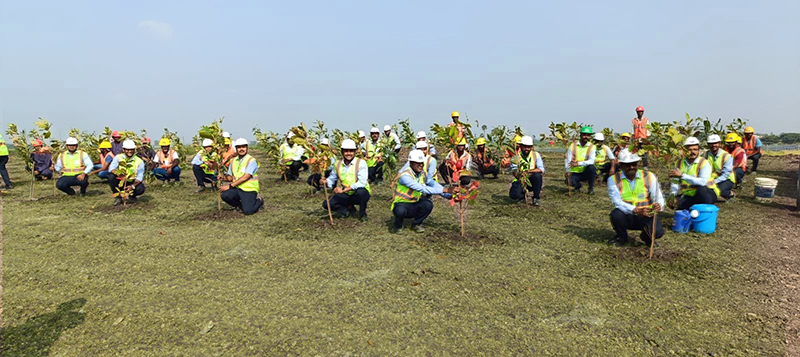
In Umrongso, Assam, we implemented a community-led afforestation initiative through the distribution of 1.4 lakh bamboo shoots across 19 villages. This intervention is designed to function as a natural carbon sink, with the potential to sequester approximately 21 lakh kg of CO₂ annually once fully grown. Beyond carbon sequestration, the project contributes to soil stabilisation, improved land productivity, and biodiversity enhancement, while creating sustainable livelihood opportunities for over 400 households, demonstrating how ecosystem restoration and community resilience can be closely linked.

Plantation Drive at Sattur, Tamil Nadu
Strategic Governance and Financial Performance
Growing With The Value Chain